January 7-8, 1998.  A silly new word for a new quarter. (#159)

For reasons I would never find out, whoever was in charge of scheduling at the University of Jeromeville did something different for the winter and spring quarters of 1998.  Winter classes began on a Wednesday instead of the usual Monday.  I did not have a problem with that, but pushing everything back two days like that had a ripple effect on the rest of the academic year, leading to a very annoyingly inconvenient schedule for spring break and spring quarter.  But that is a story for another time.

I had to get up early five days a week now for a class at eight in the morning, but the class was not on the UJ campus.  I locked my bike in the bike parking at Jeromeville High School, which was much larger than the bike parking I had ever seen at any other suburban school.  Jeromeville touted itself as a bicycle-friendly community, and this local culture trickled down to all ages.  I walked to room E-3; I knew my way around the E building, where the mathematics classes were, because I had done this same thing before last year, only with a different supervising professor back at UJ.  I arrived about ten minutes before the scheduled time for class; the door was open, and a few students were sitting in desks, talking.  A middle-aged man with graying brown hair and a mustache sat at the teacher desk.  He was of averageheight, slightly on the heavy side, with graying brown hair and a mustache.  He wore a dress shirt with a tie.

“Is this geometry, with Mr. Gibson?” I asked.

“Yes.”

“I’m Greg, the intern from UJ.”

“Yes!  Greg!  Nice to meet you.”  Mr. Gibson shook my hand.

“So what should I do?”

“For today, you can just sit in the back and watch how things work in class.  If you feel ready, you can start walking around and helping students at the end of the period when they start homework.”

“Sounds good!”

After the bell rang, Mr. Gibson read the morning bulletin to the class.  “If you look in the back of the room, you will notice someone new with us,” he announced.  “This is Greg.  He’s a student at UJ, he’s studying to be a math teacher, and he’ll be helping out in our class for the next few months.”  I waved as the students in the class turned around to look at me.

As Mr. Gibson began his lecture, explaining relationships between angles when two parallel lines are cut by a transversal, I looked around the classroom.  Many of these students looked bored.  Mr. Gibson was standing at the front of the room lecturing, and some students were occasionally copying things from his lecture into their notebooks.  I took some notes of my own while Mr. Gibson lectured, but instead of writing down theorems about parallel lines and angles, I wrote my thoughts on Mr. Gibson’s teaching style and how students responded.

I had done an internship like this the previous school year, in Mr. O’Rourke’s precalculus class.  My professor of record last time was Dr. Samuels of the mathematics department, and this internship was set up through Dr. Van Zandt of the education department, so it would show up on my transcript as Education 197 instead of Mathematics 197.  I was told that this internship would essentially be the same thing, although I could see a few subtle differences in the classes themselves already from the first day.  Mr. Gibson’s lecturing style seemed more bland to me than that of Mr. O’Rourke, who was funny and had more interaction with students.  Mr. O’Rourke was older than Mr. Gibson, but he did not fit the stereotype of older teachers being boring.  Also, typically only college-bound students took precalculus.  A geometry class had a mix of college-bound younger students and upperclassmen who were behind grade level in math.  The best students that Jeromeville High had to offer would never even be in this geometry class.  They would have finished geometry before even getting to high school, two grade levels above state standards.  That option, apparently commonplace in a university town like Jeromeville, was never available to me growing up in working-class Plumdale.

Students began their homework with about fifteen minutes left in the period.  Mr. Gibson addressed me at this time.  “You can walk around answering students’ questions,” he said.

“I’ll do that,” I replied.  I began circulating up and down the rows of desks, watching to see what students were writing.  I did not engage any of them in conversations yet, although I thought about doing this sometime soon after I was more comfortable in this new position.

At one point, one of the students raised his hand as I walked by.  “Hey, can you help me with this?” he asked.

“Sure,” I replied.  I looked at the top of his paper, where he had written his name.  “Matt,” I replied.  “I don’t know everyone’s name yet.  What was your question?”

“This one,” Matt said, pointing at a diagram with two parallel lines labeled l and m.  A third line labeled p intersected both lines, with the acute angle between p and m labeled 37 degrees.  The question asked to find the obtuse angle between lines p and l.  “What did you learn about this today?” I asked.

Matt turned back a page in his book and recited from it.  “‘If two parallel lines are cut by a transversal, the alternate interior angles are equal.’”

“The angle you know, and the angle you’re trying to find, are they alternate interior angles?  Look at the diagram.”

“I don’t know.  They don’t look equal.”  Matt studied the diagram.  “I don’t think so.”

“They’re not, because they’re on the same side of line p.  So did you learn something about angles on the same side of the transversal?”

Matt turned back to the page with the theorems on it and continued reciting.  “‘The angles on the same side of the transversal are supplementary.”

“Are those angles on the same side of the transversal?”

Matt looked at the problem again.  “Yeah.”

“And what does supplementary mean?”

“Isn’t it, like, the angles add to 90, or 180, or something like that?”

“Yes.  180.”

“So to find the angle, I would do 180 minus 37?”

“Exactly.  Good job.”

As I continued walking around the room, it occurred to me that maybe I should have asked Matt to look up the definition of supplementary himself.  But I think that was a positive interaction.  Matt figured out most of the problem himself.

After the bell rang, Mr. Gibson asked me, “So what did you think?”

“It was good,” I said.  “It’ll be good to see your teaching style and compare it to others I’ve seen.”

“Have you worked in a class here at Jeromeville High before?”

“Yeah.  Last year, with Mr. O’Rourke.”

“I’m a little different from him.  He’s good, though.”

“It’ll be good seeing a different perspective.”


I rode my bike from the high school to the Memorial Union on campus, a distance of about a mile.  I arrived a little after nine, giving me almost an hour until my next class.  I had no homework yet on the first day of classes, so I grabbed a copy of the Daily Colt, found an empty seat, and read.  My friend Eddie Baker was a writer for the Daily Colt, and he had written a fluff piece in today’s issue about made-up slang words and what some would call the butchering of the English language.  My eyes landed on a pull quote in the middle of the article, in bold font and slightly larger printing:

“I have a roommate who always says ‘buttass.’  It’s the dumbest thing I’ve ever heard.”

Jason Costello, senior

I laughed out loud.  Buttass.  That was hilarious.  Something clicked in my brain after a few seconds.  I knew Jason Costello; he was one of Eddie’s roommates in that big house on De Anza Drive.  I knew all of their other housemates too: Ramon, Lars, John, and Xander.  I had never heard any of them say “buttass.”   It was probably Lars. “Buttass” totally sounded like a Lars thing.

After skimming the rest of the articles, I folded the paper over so that the crossword puzzle was showing.  I finished it in about ten minutes, so I tore the puzzle out and put it in my backpack to put up on my wall back home later, next to the other puzzles I had finished.  Today’s puzzle seemed fairly easy, compared to others I had done.  Buttass easy, I thought, giggling to myself.

My next class was Mathematics 150B, Introduction to Abstract Algebra.  This class was a continuation of 150A from last quarter, except that the same professor did not teach it.  This new professor, Dr. Lisitsa, was a large gray-haired Russian man whom I could understand although English was clearly not his first language.  Many of the same familiar math majors from 150A last quarter were in this class, including Katy Hadley, Jack Chalmers, and Melissa Becker.  Most of 150A was easy, but it had started to get difficult toward the end of the quarter, so I was a little apprehensive about this class.  By the end of the first day, though, I was still following along with everything just fine.

After Abstract Algebra, I felt like a change of scenery, so instead of going back to the Memorial Union, I walked to the library.  The library had been expanded several times in the history of the university, to the point that it had become a rectangular ring with three distinct architectural styles surrounding a courtyard.  Behind what was now, but had not always been, the main entrance, a wall of windows three stories high looked onto the courtyard, with stairways in different directions leading to the basement, second floor, and third floor.  Part of the building had a fourth floor as well, but it was not accessible through these front stairways.

I climbed all the way to the third floor on my left.  I could have used an elevator, but I felt like climbing the stairs.  At the top of the stairs, I turned right toward the back of the building and walked along stacks of books on my left and windows on the right.  The wall was almost two feet thick, and the windows were recessed, flush with the outer wall facing the courtyard.  This created a rectangular cubbyhole-like space in front of each window, about five feet long, where students could sit and study.  I sat parallel to the walkway, with the walkway and book stacks on my left and the window on my right, my legs stretched out as far as they could.  I read through the section of the math book that we started in class today, then began working on homework.  With a three-hour gap between classes, I may as well get an early start on the quarter.

A little after twelve, I was hungry, so I walked back to the MU and got in line for a burrito. I walked to the tables, looking for a place to sit, and found Sarah Winters and Caroline Pearson, whom I had been friends with since the first week of freshman year.  “May I sit here?” I asked, gesturing toward an empty seat at their table.

“Sure!” Sarah said, smiling.

“Hey, Greg,” Caroline added in her Australian accent, slight now after having lived in the United States for a decade, but still noticeable.  “How are your new classes?”

“Good.  I’m TA-ing at Jeromeville High again in the morning.  Then today I had Math 150B, and I have Ed 110 later this afternoon.  Tuesdays and Thursdays I’m TA-ing again, and then Math 131.  Probability.”

“I took 150A and B last year,” Sarah said.  “I thought 150B was kind of hard.  But I’m sure you’ll do fine.”

“You’re a teacher’s assistant at the high school?  Is that for a class?” Caroline asked.

“Yeah,” I said.  “Education 197, for two units.  I did something similar last spring.”

“Oh yeah, I remember that.”

“When is your next class?” Sarah asked.

“Not until two,” I replied.

“Do you have that big gap in your schedule every day?”

“Monday, Wednesday, and Friday.  It’ll be a good time to get work done.”

“Are you tutoring for the Learning Skills Center, like you did before?” Caroline asked.

“Not this quarter.  I didn’t want to overdo it.”

“Good idea,” Sarah said.  “Now, you can have meet someone for lunch at eleven, and meet someone for lunch at twelve, and meet someone for lunch else at one.”  She smiled.

“Haha.  I guess I can.”  I’d probably run out of people to have lunch with quickly, though, I thought.

“How was your winter break?” Caroline asked.

“It was good.  I made a silly movie with my brother and his friends.  And I went to Valle Luna to see Brian Burr, for his New Year’s party.”

“How is Brian doing?  Where is he now?”

“New York Medical College.  He seems to like it.  What about you?  What did you guys do for your break?”

“Just hung out with family.  We went to the snow for a weekend.”

“Nice!  Sarah?  How was your break?”

“It was good. I had Christmas with family.  Saw a couple of my friends back home.”

“That’s nice.”  I thought about how I did not have friends left back home, except for my brother’s friends Cody and Boz, but I decided not to bring up that topic.


By one o’clock, Caroline and Sarah had both left for class.  I still had another hour free.  This three-hour gap between classes would take some getting used to, but within a few days, the workload would ramp up and I would be buttass busy, with plenty to do.

Today, though, I was done with homework, I had read the Daily Colt, and I had eaten lunch with friends.  I walked south to the Arboretum, which ran for a mile and a half from southwest to northeast along a creek bed which had been filled to become a long, narrow lake.  I sat on a bench amidst trees from all over the world and took out my Bible.  I opened to the back, where there was a plan to read the Bible in one year by reading three passages per day.  I turned to the chapter and verse that was listed for September 15.  I started in January of 1997 with the passages for January 1, but I had fallen behind by a few months at this point, since I only read four or five times per week.  After I read, I prayed.  I thanked God for this beautiful nature area right on campus, and I asked God that I would do well in my classes and not feel overwhelmed.

When two o’clock approached, I walked toward Orton Hall and my Educational Psychology class.  The course catalog listed Psychology 1, which I had not taken, as a prerequisite.  Josh McGraw, one of my housemates, had taken both of these classes, and he did not remember anyone checking to see if everyone had passed Psych 1.  He thought I would be fine without it.  Josh gave me his old textbook for the class too.  After the first day, I was still keeping up with everything.  So far so good.  This was a class based more on reading and writing than mathematics, which was not particularly my strong point, but I had done fine in classes like that before.


The internship in Mr. Gibson’s class was five days a week.  On Thursday morning, the second day of the quarter, it was pouring rain outside.  I took a bus to Jeromeville High School, and later I took a different bus from there to the university, both new bus routes for me.

Lars Ashford was on that second bus I rode after Mr. Gibson’s class.  “Sup,” he said when he saw me.

“Can I sit here?”

“Sure, man.”

“Hey, I’ve been meaning to ask you.  Yesterday in the Daily Colt, I read Eddie’s article about made-up slang words, and Jason said one of his roommates always says ‘buttass.’  Is that you?”

Lars laughed.  “Yeah, dude, that’s me.”

“‘Buttass’ is a great word.  I’m gonna start using it.”

“Sweet.”

I was a little bit intimidated after the first day of probability class.  The professor, Dr. Craig, said from the start that he usually only works with graduate students and does not often teach undergrads.  I got the impression that he thought we were beneath him.  His teaching style was very lecture-based, as seemed to be the case with many professors who only work with upperclassmen and graduate students.  I was following along okay, I would probably do okay, but that kind of teaching style does not work for all students.  I was starting to see that in Mr. Gibson’s class, where some of the students got easily bored.  They needed a more interactive experience, like Dr. Samuels from Euclidean geometry last year.

By the end of the class, though, I felt a little more comfortable.  When Dr. Craig dismissed us, I got up to leave the room, but a guy who was sitting a few desks away walked up to me first.  He said, “You look familiar.  Do you go to U-Life?  Or did you used to?”

I paused, trying to remember if I knew him.  University Life was the college group affiliated with the First Baptist Church of Jeromeville, which was not my church, but I knew some people from there.  “I did a few times last year,” I said.  “I usually go to Jeromeville Christian Fellowship, but I was kind of frustrated with them for a while, and I had made some friends at U-Life and they invited me.  Ben Lawton, Alaina Penn, Corinne Holt…”

The poetry reading!  At Alaina and Corinne’s house!  That’s where I remember you from.  You got up there and said a bunch of math stuff.”

“Yes!  That was me!  I don’t remember your name, though.”

“Mike.”

“I’m Greg.  Nice to meet you.”

“Nice to meet you too!”

I shook Mike’s hand, and we made small talk all the way to his next class while I attempted to hold an umbrella in the wind.  It was buttass wet outside.  I was done for the day, so I found a dry spot inside the MU to eat the sandwich I had packed.  When I finished eating, I went to my spot next to the window in the library and did my Bible reading for the day.

The first two days of the quarter were complete.  So far, so good.  Mike from Math 131 seemed like a nice guy; I had to think of him in my mind as “Mike from Math 131,” because I knew so many other Mikes and Michaels and I did not know this Mike’s last name yet.  I was enjoying helping Mr. Gibson’s students so far.  And Ed Psych did not seem too difficult yet, although I was going to have to write a buttass long term paper later in the quarter.  The rain was starting to let up by the time I got off the bus, but I still had to walk a few minutes to my house.  When I got home, I took off my backpack and lay on my bed.  It was time for a nap. I’m tired, I thought to myself. Buttass tired. This was going to become my new favorite word. Of course, some would disapprove of making up new words like this, but that is all part of how language and communication evolve. Some new words bother me, yet I have been known to make up new words myself. It probably has more to do with what the new word is. New words that bother me tend to be related to things I already do not like, whereas new words like “buttass” just make my inner potty-humor-loving child happy.

The tree in the library courtyard would not have been so green in January. I took this photo in 2022 at the Spring Picnic.

Readers: Do you and/or your friends have any buttass silly words that you made up? Tell me about them in the comments!

If you like what you read, don’t forget to like this post and follow this blog. Also follow Don’t Let The Days Go By on Facebook and Instagram.


December 31, 1997. Brian was known for throwing amazing New Year parties. (#158)

I packed my sleeping bag and pillow in the back of my Ford Bronco, along with a bag containing my toothbrush and toothpaste.  I had considered bringing the sweat pants I wore for pajamas and a full change of clothes, but realized I was overthinking.  I would only be staying long enough to sleep, so as not to have to drive home in the middle of the night, and leaving first thing in the morning.  I could handle sleeping in my clothes for one night.

I started the car and headed out of Jeromeville south on Highway 117, merging onto Highway 100 west toward Bay City two and a half miles down the road.  The weather was cool and cloudy but dry, typical for an afternoon in December.  It was only four-thirty in the afternoon, but the sun would already be setting soon, also typical for December.

This first part of the drive was extremely familiar to me, since it was the same drive I made every time I went back home to see my family.  I had just been this way yesterday morning in the opposite direction coming home from winter break.  I watched the fields and trees pass by as I continued heading southwest across the short dimension of the Valley at sixty-five miles per hour.  The cities of Silvey, Nueces, and Fairview passed by me as I passed slow trucks and reckless drivers passed me.  Just past Fairview, about thirty miles past Jeromeville, I started to merge into the right lane, to get on Highway 6 southbound toward San Tomas, when I realized that I was not going that way.  Almost every other time I had made this drive, I had taken 6 south, headed toward home, but today I was going somewhere else.

I took the next exit, Highway 212 west toward Silverado and Redwood Valley.  The rest of my drive would not be a straight shot down one road, and much of it would be on roads with one lane in each direction, winding through hills covered with vineyards and cow pastures.  It would be much more fun making this trip in the other direction tomorrow morning after the sun came back up, so I could actually see the beautiful countryside and the road ahead.

I crossed the Silverado River on a high bridge and followed the highway around a curve to the right, toward the city of Silverado, only to turn left at a stoplight and head away from the city on a road with just one lane in each direction.  I was trying not to drive too fast, since I had only been this way twice before and did not want to miss a turn in the dark.

I found the turn I was looking for, Highway 164 to Hillside, a few miles before Redwood Valley.  Highway 212 went directly to Valle Luna, but Brian’s directions said that there was a faster way to get from Jeromeville to Valle Luna.  I was not familiar with this area, so I took his word for it.  I had gone this way two years ago when I went to visit Renee Robertson at Valle Luna State, but the university was south of 212 so in that case it made sense to take 164 and not backtrack.

At around 5:50, I got to Hillside and turned onto Highway 11 northbound for another fifteen miles into Valle Luna, a good-sized city of about two hundred thousand residents.  Highway 212, which I had turned off of earlier, crossed Highway 11 right in the middle of Valle Luna.  I turned on 212 west and drove to what appeared to be the extreme western edge of the city, as fields opened up against the hills to the west that separated Valle Luna from the coast.  I turned right at a stoplight which took me back into residential neighborhoods, and about two miles north of 212, I turned into the Burrs’ neighborhood.

Brian Burr, one of my roommates from the previous school year, was two years older than me, having graduated from the University of Jeromeville in 1996.  His goal was to be a doctor, but he had not gotten into any medical schools.  He spent the 1996-97 school year working part time on staff with Jeromeville Christian Fellowship, where I had met him, and also retaking all the entrance exams and reapplying to medical school.  Last fall, he moved across the country to attend New York Medical College, just north of New York City in Westchester County.  He had just finished his first semester, and he was back at his parents’ house in Valle Luna for winter break, where apparently he was known for throwing amazing New Year parties.

Brian’s parents lived on a cul-de-sac just a little way off of the main road.  It was only 6:14, still hours before midnight, but I could already tell that parking on the cul-de-sac would fill up quickly.  I parked my car in one of the last remaining free spaces and knocked on the door.

“Hi,” a middle-aged man said.  “You’re looking for Brian, right?”

“Yeah.”

“You look familiar, but I don’t remember your name.”

“I’m Greg,” I said, shaking Mr. Burr’s hand.  I had only met Brian’s dad once before.  “Brian and I were roommates last year, at the apartment on Maple Drive.”

“Oh, yeah!  Is this your first New Year’s party here?”

“Yes.”

“Welcome to our house.  It’ll be a lot of fun.”

“That’s what I hear.”

“So Brian said you’re younger than him, right?  Are you still in school at Jeromeville?”

“Yeah.  I graduate this spring.”

“What are you studying?”

“Mathematics.”

“Greg!” I heard Brian’s familiar voice say.  “How you been, man?” he asked as he pulled me into an embrace.

“Good,” I said.  “How’s medical school?”

“It’s a lot of work.  But it’s good.  What about you?  You went away to Oregon or Washington or something for the summer to do research, right?”

“Yeah.  Grandvale, Oregon.  I’m glad I went, but the biggest thing I learned was that I don’t want to do math research as a career.”

A tall blond guy around Brian’s age walked into the room.  “Greg!” he said.  “What’s up?”

“Hey, Mike,” I said.  Mike Kozlovsky had graduated from UJ the same year as Brian.  He was also from Valle Luna, and he had moved back home after graduation.  “I was just talking about last summer,” I continued.  “I did a math research internship in Oregon, and I learned that I didn’t want to go into math research.”

“Aww, bummer,” Mike replied.

“Better to learn this now, rather than after I gave three years of my life to a Ph.D. program,” I said.

“That’s a really good point,” Brian said.

“Why didn’t you like it?” Mike asked.

“Math research is weird!” I explained.  “All the things being researched are so abstract and advanced that I can’t understand them even when I’m about to finish a degree.  It’s just not interesting.  And I also just didn’t really click with the others in the program.”

“So what do you want to do now?” Brian asked.

“I’m gonna be a teacher.  Probably for high school.”

“Will you be in the same program Shawn was in?”

“That’s the plan.  I’ve applied to that.  I also thought about applying to the program at Capital State, but it’s kind of confusing how theirs works, and it won’t really be any advantage for me to do that one.  I just want to get into a classroom as soon as I can at this point.”

“Hopefully you don’t end up with the same master teacher that Shawn hated.”

“Didn’t Shawn quit the program, or something?” Mike asked.

“He finished all the classes, but he didn’t apply for any teaching jobs,” Brian explained.  “He moved back to Ashwood and opened a running apparel store with one of his old running buddies back home.”

“That’s right.”

“Is Shawn coming tonight?” I asked Brian.

“No.  He really wanted to, but he’s too busy with the store.”

“I get that.”


I walked inside and sat next to a bowl of tortilla chips as Brian mingled with people I did not recognize.  A large amount of pizza arrived about an hour after I did, and I piled about five or six slices on my plate and began eating.

As I watched people trickle in, and waved and said hi to the ones I knew: Kristina Kasparian, Lars Ashford, Lorraine Mathews, John Harvey, and several others.  But I also realized that Brian had a lot of friends whom I did not know.  I met Brian two years ago through Jeromeville Christian Fellowship, when Brian was a senior and I was a sophomore, but I did not know him well until that next spring and summer when he and Shawn and I made plans to live together.  Brian had been at UJ for two years before I started there.  He had probably made friends with people who ran in different circles, or had graduated, by the time I met him.  Brian also was at his parents’ house, in Valle Luna, where he grew up, so some of these people whom I did not know were probably Brian’s childhood or high school friends.

Eddie Baker and Tabitha Sasaki had arrived separately, about half an hour apart, while I was eating chips and pizza. I had said hi to both of them, but we had not actually talked yet, so when I was done eating, I walked to where they were sitting.  “Greg!” Tabitha said, smiling and motioning to the empty couch seat on her left.  Eddie sat on her right.  “Come sit down!”

“Hey,” I said, a little louder than I would have liked since there was now music playing.  I did not recognize the song.  “What have you guys been up to?  How’s your break going?”

“Good,” Eddie said.  “Mostly just been hanging out with Tabitha.”  Eddie and Tabitha did not know each other before coming to UJ, but their families lived fairly close to each other in two neighboring suburbs of San Tomas.

“Did you go home to Plumdale?” Tabitha asked.

“Yeah,” I replied.  “My cousins who visit every Christmas were there.  And last weekend I made a silly movie with them, and my brother, and some of my brother’s friends.”

“That’s great,” Eddie said.  “Kind of like the Dog Crap and Vince movie you made with the kids from church?”

“Exactly!  My brother saw that when I brought it home for Thanksgiving, and he wanted to make a movie with me too.”

“How are things going as a youth leader anyway?”

“Good!  I’m going to Winter Camp in February.  That’ll be fun.”

“It will be!  Make sure you bring snow clothes.”

“I know.  I’m going to need to do some shopping.”

“What was your movie about?” Tabitha asked.

“We have this game we kind of made up called Moport.  It’s like a cross between soccer, football, and hockey.  In our movie, this bad Moport team accidentally drafts the wrong player, and he’s really weird, but they find ways to win.  And this other guy tries to sabotage the team.”

“That sounds silly.”

“Very silly,” I agreed.  


After I finished catching up with Eddie and Tabitha, I watched Brian and some others dancing to some song I did not know, with lyrics in Spanish.  Scott Madison and Amelia Dye were sitting in chairs next to the snack table.  I had not talked to them yet, so I sat down in another empty chair at the table.  “Hey,” I said.

“Hi, Greg!” Amelia said, smiling.

“Greg Dennison’s Chili,” Scott added, shaking my hand, using the nickname he had recently come up with for me.  I had had a few people over the years ask me if I was related to the people who made Dennison’s brand chili (I was not), but Scott was so far the first to use that as an actual nickname.

“How’s your break going so far?” I asked.

“Pretty good.  Just doing a lot of wedding planning stuff,” Scott explained.

“And working on med school applications,” Amelia added.

“When is the wedding?”

“June 27,” Amelia explained.  “We’ll be having the ceremony at J-Cov, then for the reception we’ll all caravan across the Drawbridge to the Capital City Downtown Ballroom.”

“Nice.”

“Hey, guys,” Brian said, joining us.  “What’s up?”

“Oh!  Brian!  Guess what I’m doing in three weeks?” Amelia said excitedly.  “I have an interview at New York Med!”

“Nice!” Brian said.  “That would be cool if you two ended up moving to New York with me.”

“Yeah!  We’d know someone already there.”

“How is medical school going?” I asked Brian.

“It’s good.  So far it’s just classroom work, so not that different from what I experienced at Jeromeville.  But it was hard to get back into the routine of being in school again, after taking last year off.”

“I bet,” I said.

“We had an end-of-semester social event for all the first-year med students a couple weeks ago.  It’s a little weird that they serve alcohol at school-sponsored socials.  They just assume everyone in med school is old enough to drink.”

“That makes sense,” I said.  “Because everyone is.  Amelia?  Where else have you applied?”  Amelia listed numerous other medical schools around the country.  Much like Brian had the previous year, Amelia really had applied all over, but apparently New York Med was one of her top choices.  That would be nice if Amelia and Brian ended up at the same school.


As the night went on, the party got louder.  A few people seemed a bit tipsy, and Brian had had a few drinks, but many of Brian’s friends from Jeromeville were Christians and did not drink to excess.  At one point, someone pulled out a karaoke machine, and Brian sang “Dancing Queen” by ABBA, one of his favorites.  I had been in University Chorus three times now, but I still did not like singing solo in front of people.

Later, after the karaoke machine had been put away but with music still playing, another ABBA song came on, “Take A Chance On Me.”  Brian jumped up and began dancing with his arms in the air.  One time when we lived together, I came home from class, and as soon as Brian saw that I was home, he put on Take A Chance On Me and started doing this same silly dance he was doing now.  

A few minutes after Take A Chance On Me finished, people started saying it was time, and someone turned off the music.  It took a few seconds for me to figure out what was going on; after I remembered the occasion of this evening, I looked at my watch surprised to see that it was already close to midnight.  The night went by fast.  Someone turned on the television to one of the major networks’ New Year broadcasts, and when the countdown to midnight displayed on the screen reached thirty seconds, everyone stared at the screen and began counting out loud.  Numbers that large were difficult to count down at a rate of one per second, so I did not join in the countdown until ten seconds were left.

“Ten!  Nine!  Eight!  Seven!  Six!”

By now, people were excited enough that the counting was no longer synchronized to the clock on the television, or to each other.  As much as it bothered me to be inaccurate, I tried to stay synchronized to the majority of the people counting.

“Five!  Four!  Three!  Two!  One!  Happy new year!”

I heard those loud little confetti poppers being popped across the room.  Someone handed me one; I pulled the string and watched a small amount of confetti explode upward away from me.  Those who had drinks in glasses clinked their glasses together; Scott and Amelia were closest to me, and I clinked my aluminum Coca-Cola can to their glasses, saying “Clink!” out loud since my can did not make a clinking noise.  Scott laughed.

I stayed up for at least another two hours, talking, watching people dance, and occasionally snacking.  This kind of thing happens to me every New Year’s Day, but I was still trying to wrap my head around the fact that it was 1998 already.  I was going to graduate in 1998.  That was only six short months away, and a few months after that, I would be student teaching in a high school math classroom somewhere.  As I got older, as the year number on the calendar kept going up, life just seemed to move faster and faster.

Around two in the morning, I walked out to my car and got my sleeping bag.  Brian had said to bring a sleeping bag, that we were all welcome to sleep on the floor and leave in the morning.  The party was starting to quiet down by then, since many of the locals had gone home.  It was still noisy enough that I was not expecting to fall asleep, but I was tired enough that I nodded in and out of consciousness for the next hour and a half.  I woke up having to use the bathroom at 3:30, and by then, the living room was dark, with several other people asleep in sleeping bags on the floor.

I woke up again at 7:42, and could not go back to sleep.  Everyone else was still asleep, and I did not want to wake anyone.  This kind of thing often happened to me when I was sleeping away from home in a group, where I was awake far earlier than everyone else, so I packed a book to read just in case, The Pelican Brief by John Grisham.  The lighting was not ideal for reading, since the sun had just come up and the drapes were closed, but I could see well enough.

A few people gradually woke up as I was reading; I waved hello and occasionally whispered when necessary.  I hated sleeping in a strange place with other people in the room, but I did not want to leave without saying goodbye to Brian.

Brian finally appeared around 9:15.  I stood up, still fully clothed from the night before, rolled my sleeping bag, and went to the bathroom, also brushing my teeth this time.  Then I walked toward Brian at the kitchen table.  “I’m going to head home now,” I said.

“Okay,” Brian replied.  “Thanks so much for coming.  It was good seeing you.”

“You too!  Thanks for inviting me!  Keep in touch.  Good luck with school.”

“Thanks.  And good luck with being a teacher.  I think you’d make a great teacher.”

“Wow.  Thank you.”

I said a quiet goodbye to everyone else who was still at the party and awake.  Some of them I would not see again for a long time.  Others who were still students at UJ I would see in a few days at most.

The drive home through the hills between Valle Luna and Silverado was, as I suspected, beautiful in the daylight.  It had rained enough over the last month that green grasses were growing in empty fields.  Many of the hillsides were planted with grapevines, which were bare this time of year, without leaves, but there was something calming about the parallel rows of grapevines and lattices covering the countryside.

As would often happen at the beginning of a year, I drove toward Jeromeville with a feeling of hope and promise.  This year had positive things in store.  In addition to graduation and starting a new phase of my education, I also had Winter Camp to look forward to.  And I was sure that the year would be full of unexpected surprises, some good, some bad.  Maybe this year would be full of new experiences.  Maybe the love of my life would be waiting just around the corner.  Who knows?


Readers: How do you usually celebrate the New Year? What’s your most memorable New Year story? Tell me about it in the comments.

If you like what you read, don’t forget to like this post and follow this blog. Also follow Don’t Let The Days Go By on Facebook and Instagram.


December 26-29, 1997. I made another movie. (#157)

Author’s note: I’m back.

I don’t know if I’m going to be able to post weekly, like I’ve always tried to. I don’t want this project to become stressful. But I’ll do the best I can, and hopefully my small handful of loyal readers will stick with me even I take a week off here and there.


A month ago, when I went home to Santa Lucia County for Thanksgiving, I showed my family the Dog Crap and Vince movie that I had made with the kids from the youth group at church.  I first created the characters from Dog Crap and Vince when I was still in high school, with a lot of input from my brother Mark, and I have always credited Mark as a co-creator of Dog Crap and Vince.  They all enjoyed the movie.  Mark said that when I came home for Christmas, we should get together with his friends Cody and Boz and make another movie.

We did not own a video camera.  I had always wanted one growing up.  I had tons of silly ideas for TV shows and movies, sometimes Mark and I and some combination of his other friends would even act them out and even record the audio, but we never had the capability to record video.  Video cameras cost a lot of money back then, and it was never a priority for my parents to have one.  But Mark said that Boz had one we could probably borrow.

It was now the Friday after Christmas.  I was planning on driving back to Jeromeville either Monday night or Tuesday morning.  I was getting bored at home.  Three and a half years after graduation, I had lost touch with all of my high school friends.  There was not much to do at home except hang out at home.  The closest thing I had to friends at home were Mark, Cody, and Boz.  I was going to graduate from the University of Jeromeville in six months, and they were sixteen, still in high school.  This was less of an age difference compared to when I was seventeen and they were twelve, but they still did not feel like a primary social group for me.

Despite how bored I was, I had made no progress on this movie that Mark and I were supposedly going to make.  I had not done much of anything the whole time I was home.  We had our family Christmas with Grandma and Grandpa and the Lusks, who were in the area for the holidays.  Jane Lusk was my aunt, my mother’s younger sister; she visited every Christmas with her husband Darrell and their children, nineteen-year-old Rick and seventeen-year-old Miranda.  Uncle Darrell’s family was also in Santa Lucia County, so they spent a week going back and forth visiting both sets of their relatives. 

Mark had a new game for Nintendo 64, GoldenEye.  The game follows the story of the James Bond movie of the same name, which I had seen once.  The most well-known feature of this game was a multiplayer free-for-all mode, in which two to four players battle each other.  Rick and Miranda and Mark and I spent many hours of that winter break playing GoldenEye, as well as Mario Kart.  In both games, Mark almost always won, and Miranda almost always came in last place.

In those days, Mark would often record what he was watching on television on a VHS tape, so he could watch it again.  He watched Saturday Night Live regularly, because in the 1990s it was actually funny much of the time.  Whenever the show would run a sketch that was not worth rewatching, he would back up the tape during the next commercial and record over it immediately.  Whenever I would go home, Mark would share with me his Saturday Night Live highlights.

Saturday Night Live had been in the news recently because Chris Farley, a cast member on the show a few years earlier who was also in a few movies after that, had died of a drug overdose a couple of weeks earlier.  Two months before his death, Farley had returned to SNL as the weekly guest host, and Mark saved that entire episode.  Earlier that week, I had watched Farley reprise many of his past recurring characters.  He also portrayed an exaggeratedly intoxicated Hank Williams Jr. and the weather phenomenon El Niño, acting like a professional wrestler.  Throughout the whole time Mark and I watched the episode, Mom kept interrupting, commenting on Farley’s visibly poor health.

The next day, Mark and I watched other things he had recorded since then.  We watched what was then considered the final episode of Beavis and Butthead, although unbeknownst to anyone at the time, the show would be revived in the 2010s and 2020s.  After this, we watched another SNL in which a Bill Gates character announced that Microsoft had bought Christmas, and that Mac users were now Jewish.  Bill Gates then proceeded to spy on Cuban leader Fidel Castro, who was dancing to the song “Tubthumping.”  Oddly random, but hilarious.

Mark got home from basketball practice while I was eating dinner Friday night.  Mark got all of the athletic talent in our family.  He also had a great deal more artistic talent than me, and he and some of his teammates had begun a new tradition of drawing temporary tattoos on each other with permanent marker.  “What’s that?” I asked, pointing to the tattoo that someone had drawn on Mark today.

“A polar bear,” Mark explained.  “John McCall drew it.”  The polar bear on Mark’s arm was floating on a piece of sea ice, with the letters POLAR BEAR underneath in a style imitating the Old English blackletter font.

“And why do you have a tattoo of a polar bear?” I asked.

Mom and Dad were in the room with us.  “That’s the nickname the others on the team have come up with for Mark,” Mom said.

“And why is Mark’s nickname ‘Polar Bear?’”

Dad answered this time.  “Because he’s big and white!”

I laughed.  “That does make sense.”

Later that night, Mark and I were playing Mario Kart, and Mark said something that reminded me of something from Dog Crap and Vince.  As my brain started thinking of related things, I said out loud, “We never made that movie we were going to make while I was home.  Do you still want to?”

“I don’t know,” Mark replied.  “Do we have time?  How long are you gonna be home?”

“I’m leaving probably late Monday night or early Tuesday morning.  So we’d have about 72 hours.”  As I continued steering Luigi around the course, throwing banana peels behind me, I got an idea.  “I think this sounds like a challenge.  We have 72 hours to make a movie.  And we’ll call our production company ‘72 Hour Films.’”

“Sounds good.  I’ll ask Boz in the morning if we can go get his camera.  Boz was probably going to come over this weekend anyway.”

“Great!  And if Rick and Miranda are around, we can get them in our movie too!  So what’s it going to be about?”

“I don’t know.  This was your idea.”

“Well, you’ve been saying this whole time that you want to make a movie.”

“I do, but I don’t know what it’s about!”

I saw the GoldenEye cartridge sitting next to the Nintendo console.  “What about a spy movie?  Like GoldenEye?”

“Maybe, but it seems like that might be too hard if we only have 72 hours.”

I thought about other things I had done at home during previous school breaks, and suddenly it came to me.  “Moport,” I said.  “Let’s make a sports movie about Moport.  Like, maybe, there’s a Moport team that’s terrible, they finish last in the league, so they get the number one draft pick, but the player they draft ends up just making things worse.”

“That could work.”

“Ooo.  Better idea.  They accidentally draft the wrong player.  Like, the general manager gets the name wrong at the draft, and the player they pick is this weird crazy goofball.”

“But all the goofy stuff he does is so crazy, they still end up winning!” Mark said.

“Yes!  Perfect!”

“As long as we get Boz to play the goofy guy.  He’d be great in that role.”

“Definitely.”


Moport was a game my brother and I invented, based on a game I played in PE class in high school.  The game I learned combined elements of football and soccer; Mark and I added hockey sticks to the mix, and Moport was born.  For the last few years, we had held a two-on-two Moport tournament in the front yard with Cody, Boz, John McCall, and some of Mark’s other friends.

By the time Mark and I went to bed that night, we had a workable script, and we had decided to title the movie #1 Draft Pick.  I suggested that the team in the movie have a geographically appropriate, yet ridiculous-sounding name, like many actual low-level sports teams.  The Gabilan Valley in Santa Lucia County is known for growing vegetables, so we named our team the Gabilan Fighting Salads.  The movie would open with the Salads losing badly, finishing in last place again, giving them the number one draft pick for the following year.  After drafting the wrong player, as we had previously decided, we would show scenes of this player, whom we had named Evan, practicing and playing and still somehow finding ways to score.  We added implied references to Evan being on drugs.  I suggested that Evan played college Moport for North Coast State, because that was a well-known hippie stoner school, and it was also where Rick went, although Rick was not at all a hippie or stoner.

After the Salads’ first win, the team practiced the next day, and Evan accidentally kicked a ball that left the field and hit a supervillain-like bystander in the face.  The villain vowed to get revenge on the Salads and sabotage their season.  He sent a henchman to break into the locker room and plant drugs on Evan.  When Evan’s name was cleared, the villain hired another henchman to shoot Evan.  Mark and I both agreed that Rick should play this other henchman, since Rick’s side of the family were gun enthusiasts.  “But we should use the Nintendo Zapper as the prop gun,” Mark suggested.

“That would be hilarious,” I replied.

We continued brainstorming the ending of the movie.  Evan survived the shooting, so the villain drove his car onto the field and ran over Cody’s character, whom we named Bob.  Cody did not look at all like someone who would be named Bob, so we thought that was funny.  Bob needed to play injured since the Salads were out of replacement players, and they managed to score a goal on a ridiculously improbable shot.

“Then we should end by showing Fidel Castro dancing,” Mark said, laughing, referencing Saturday Night Live.

“Let’s name your character ‘Castro,’” I suggested.  “And at the end, you’re not there, and Evan and Bob talk about how you went to visit your Uncle Fidel in Cuba.”

“Yes!”


My least favorite part of doing a creative project with other people involved is getting everyone together at the same time.  Fortunately, the Lusks were already planning on coming over today, as was Boz.  Mark called Cody, and he was free to come over as well.  Ronnie and D.J. Lusk, Rick and Miranda’s other cousins on their dad’s side, lived about an hour drive away, and they were also in town for the day.  That gave us two more people to use as extras in the movie; Ronnie and D.J. played one of the opposing teams.

“Dad?” I asked as we started filming Saturday morning, shortly after Boz showed up with the camera.  “Can you be in our movie for one scene?”

“Ahh,” Dad grunted as he got up from the couch, faking being annoyed although I knew he was going to enjoy helping out.  “What do I have to do?”

“You’re the general manager of the Salads, but you get the player’s name wrong at the draft,” I explained.  I placed the script on the table where he would be sitting in the shot, so that he could glance down at his lines if he needed to.

I sat next to Dad, in character as Coach McAfee.  Mark and Boz faced us, with Boz holding the camera.  “Where’d you get the camera?” Dad asked.

“We’re borrowing it from the Bosworths,” I explained.

Dad turned to Boz and asked, “That’s your camera?”

“Yeah,” Boz replied.

Dad played his part perfectly, speaking in an absent-minded manner that would make it believable that he would select the wrong player.  As an added bonus, he called his own team the Lettuce instead of the Salads.  To this day, I do not know if that was intentional, adding to the mood, or if that was just Dad being Dad and actually getting the name wrong.  After Dad called Evan’s name, Boz ran into the scene, in character as Evan, doing a silly dance and hugging Dad’s character.  Evan wore a sleeveless top with his arms covered in tattoos, drawn by Mark with a permanent marker.

Next, we went outside and set up the Moport field in the front yard, with the same scoreboard and goals that we used for the actual Moport tournament.  When we got to the part with the supervillain getting kicked in the face, we filmed Boz and Cody, in character as Evan and Bob, kicking the ball around in practice.  Evan then kicked the ball so hard it flew off camera.  My plan was to have the villain, played by me in a different costume from Coach McAfee, looking out of a second-story window with the ball coming in from off screen to hit me in the face.  But I had to change clothes for this.

“What are you gonna wear?” Mark asked.

“I don’t know,” I said. “Let me go look.”  I went inside to the closet in my old bedroom and dug around, not really sure what I was looking for, but hoping I would know when I found it.

In eleventh grade, five years earlier, I had to do a group project for history class, a presentation on one decade in American history.  My group got the 1950s.  We talked about President Eisenhower, the war in Korea, McCarthyism, and the Cold War.  We also included some references to the culture of the 1950s, which my classmates decided would include getting me to dress up as Elvis Presley and lip-synch and dance.  Mom got in on this, decorating an old thrift store shirt with fringe and sequins for my Elvis costume.  When my classmates recorded me for the class project, I could not keep a straight face for more than ten seconds, but we decided that would be enough, because the stuffy 1950s father would turn off the television after ten seconds and refuse to let his children watch that garbage.

I found the Elvis shirt in my closet, along with a trucker cap printed in a cow pattern, which Dad had gotten from a local auto parts store, and a pair of oversized sunglasses.  I walked to the window where my villain character would get hit in the face and opened it.  “I’m ready,” I said to Mark, Cody, and Boz, still outside below.

“What the hell are you wearing?” Mark shouted.

“It’s my villain costume,” I replied.

“How is that a villain costume?  You look ridiculous!”

“Hey, we’re not exactly trying to win an Academy Award for costume design.  I was going for something that would look different from my coach character.”

After we finished, I went downstairs, taking off my villain costume as I walked outside.  “Is that the Elvis shirt?” Dad asked as I walked past.

“Yeah.  You’ll just have to see the final movie when we finish.”


We had just as much ridiculous fun for the rest of that Saturday and Sunday as we finished filming.  For the scene where Rick’s henchman character shoots Evan, Rick wore a black cowboy hat and boots, with an actual holster on his belt.  We all had a hard time keeping a straight face as Rick, trying to be serious, pulled the Nintendo Zapper, the gun from the old Duck Hunt game, out of his holster, complete with cord dangling from the bottom.

Although we kept the plot basically the same, we added two scenes that were not in the original script.  In one, Boz, in character as Evan, wakes up in the middle of the night and has a vision of two-time Moport champion Mark Dennison giving him encouragement.  Mark Dennison was, of course, just Mark playing himself, wearing his Ice Monkeys uniform from the Moport tournaments.  Since this was an extremely low-budget film, many of us were playing multiple roles, and the audience would just have to accept the fact that Mark Dennison looked exactly like Evan’s teammate Ben Castro.  Although Mark Dennison had some encouraging words for Evan, he acted kind of obnoxious, eating Evan’s food and sitting right on top of him on the bed.  Pee-Wee the cat was in the room at the time, and Mark picked her up and started petting her.

The other scene that we added happened after the villain’s plan to plant drugs on Evan failed.  Boz played a double role as the henchman who planted the drugs, and only Boz and I were in the room when we filmed this scene.  The camera did not need to move, so I just placed it on a table.  On Monday morning, when I had finally finished editing, I watched the final cut of #1 Draft Pick with my family and the Lusks, and I had not yet realized that none of them had seen this scene, not even Mark.

“The plan didn’t work!” Boz’s hunchbacked henchman character shouted on screen.  “Evan was proven innocent, and he’ll be playing in tomorrow’s game!”

On the screen, in character as the villain with the Elvis shirt, I looked directly toward the camera and said, “Then it’s time for Plan B.”  The henchman walked off screen, tapping his fingers together.  A few seconds later, the villain reached over and pressed Play on a portable CD player.  Right Said Fred’s “I’m Too Sexy” began playing as the villain began doing some kind of dorky, ridiculous dance.

As my family watched this scene, hysterically laughing, Mark looked at me, confused.  “That’s Plan B?” he shouted.  “What is going on here?”

“I don’t know,” I said, laughing so hard I began crying.  “I was just doing something weird.”

“But… really?  That’s your Plan B?”

Mom and Dad laughed particularly hard at later scenes in the movie, like when Rick’s character shot Evan with the Duck Hunt gun, and when the villain drove his car onto the field.  “So that’s why you drove on the lawn the other day,” Dad said.  As the final scene played, with Mark and I in character as Ben Castro and Uncle Fidel, dancing to Tubthumping, then transitioning to the credits, I looked around the room to see everyone’s reaction.  “That was very good,” Mom said.

I made a copy of #1 Draft Pick to leave with Mark and packed the other one that night to bring back to Jeromeville with me.  Mark showed the movie to Cody and Boz the next time he saw them, and they both enjoyed it.  I showed it to a couple of my school friends over the years, but not nearly as many people saw this one compared to my earlier Dog Crap and Vince movie.  But, considering how quickly we had to put everything together, it turned out fairly good.  This was definitely the highlight of my winter break that year.

And of course, to this day, my family still laughs whenever we hear the phrase “Plan B.”


Rest in peace, Uncle Darrell. He lost his battle with cancer in 2023 as I was outlining this episode.

If you like what you read, don’t forget to like this post and follow this blog. Also follow Don’t Let The Days Go By on Facebook and Instagram.


(February 2023. Interlude:”Why Must I Take The Time”)

My planned hiatus has lasted longer than I thought it would. So I put an old poem on the other blog, and I’m sharing it here so you can have something to read. Let me know what you think… I remember this one getting an interesting reaction when I first wrote it.

Also, I think when I do get back to writing, I’m not going to stress about posting every week.  I have a lot going on in real life, and I want DLTDGB to stay fun and not become more stress.

Greg Dennison's avatarGreg Out Of Character

My planned hiatus from DLTDGB is extending into a third month. I started episode 157 about a week ago, but I only got a few paragraphs in. I’ve been busy. I don’t want to leave my tens and ones of readers empty-handed, though, so I dug up this poem from 2008.

Since I’m a very unconventional poet, my favorite part about writing poetry was always allusions to other works (not necessarily fancy literature) and cryptic references. And this poem has both. (I didn’t hide a secret message in the usual place, though.)

I remember sharing it on Facebook, maybe Myspace and Livejournal too because 2008, and I remember a few people commenting on one line in particular, wondering what it meant. I won’t say anything more. Here you go.


“Why Must I Take The Time”
Gregory J. Dennison, November-December 2008

Why must I take the time to mourn the loss

View original post 108 more words

December 9-12, 1997.  Not everything follows consistent rules the way math does. (#156)

Three more days, I kept telling myself as I stared out the window of the bus.  Three more days, and I could finally take a break from studying.  I could take a break from everything, in fact.  It was Tuesday morning, and by Friday afternoon I would be done with this quarter.  

I arrived at campus around nine-thirty, an hour before my first final.  I had been studying abstract algebra all weekend, and I felt ready for this final.  But I still found an empty seat in the very crowded Coffee House, across the street from Wellington Hall where my class met, and reread sections of the textbook over again.  That was just who I was when it came to studying.

A few minutes after ten, I saw a girl from my math class named Jillian walk by.  She was a thin, pale girl with shoulder-length straight hair that was dyed black, and she held a large chocolate chip cookie in a paper wrapper.  I did not know her well, we had never really said more than hi to each other, but I recognized her enough to wave.  She waved back and walked toward me.

“How’s it going?” Jillian asked.  “Ready for the final?”

“I think so,” I said.  “What about you?”

“I’m freaking out.  This is gonna be so hard.  Can I sit down?”

“Sure.”

“Quiz me on vocabulary.”

“What’s a group?”

“It’s a set with, um, an operation on the elements of the set, and the inverse property.”

“And?”

“Oh.  And the identity.”

“And there’s one more thing.”

“There is?”

“Another property that the operation has.”

“Commutative.  No, associative.”

“Associative, yes.  And a group with the commutative property also, what’s that called?”

“It’s that one that starts with A.  Crap.  I don’t remember.”

“You’re right, though.  Abelian group.”

“Oh, yeah!”

Jillian opened her textbook and skimmed through it as she took a bite of her cookie.  “It’s a little chewy,” she said after swallowing. “It’s like it isn’t cooked all the way through.”  She took another bite and continued, “I guess I should say it isn’t baked all the way through.”

“That’s weird,” I said.  “Why do they call it a cookie?  You bake it, you don’t cook it.  They should call it a bakie.”

“Yeah.”

“I’m gonna start using that,” I said.  “Chocolate chip bakies.”

Jillian looked up at me.  “How are you doing this?  We have a final in a few minutes, I’m freaking out trying to cram as much as I can, and you’re over here talking about bakies!  I wish I could be as calm as you right now.”

I laughed.  “I guess I just feel ready for this final.”

“I wish I did.”

Jillian and I sat at the table for another fifteen minutes or so, occasionally quizzing each other about abstract algebra.  When I noticed it was almost time for the final, I asked, “You want to walk over now?  It’s almost time.”

“Sure,” Jillian replied, grabbing her bag and slinging it over her shoulder.  I put on my backpack, and we walked together across the street to Wellington Hall.

“What are you doing over break?” I asked.

“Just going home.”

“Where’s home?”

“Capital City.”

“That’s not far.”

“What about you?  Are you going home?”

“Yeah.  Plumdale.  Near Gabilan and Santa Lucia.”  By then, my fourth year at the University of Jeromeville, I no longer waited for people to ask “Where’s that?” when I mentioned Plumdale.

“How far is that?  Couple hours’ drive?”

“Yeah.  Two and a half.  Then for New Year’s, I’m going to see my old roommate at his parents’ house in Valle Luna.  He’s in medical school in New York now.  And apparently he always has these massive New Year’s parties at his parents’ house.  I’ve never been to one.”

“That sounds fun.”

The math final was straightforward, and I thought I did well.  I hoped that Jillian did well too; she seemed really worried about this final.  Although fourth-year university mathematics courses were not as easy to me as high school math was, I still felt bad for people who struggled so much with math when I did not.  Everything made so much sense, and everything followed consistent rules.  But those people who are not good at math are good at other things in life that I am not.  Unfortunately, not everything follows consistent rules the way math does.


Part of the reason I felt like the rules of life were so inconsistent were that I, like all people, was often not in control of the things that happened to me.  I had heard all of the clichés about making things happen and not being a victim of circumstances, but that could only go so far.  I was not in control, and I never would be.  But occasionally, the unpredictability of life worked out in my favor.

I had two other finals, my other math class tomorrow afternoon and English on Friday.  I wanted to find a quiet spot in the library and study this afternoon before I went home, but first it was time for lunch.  I walked back to the Coffee House where I had been sitting earlier.  The student-run Coffee House, despite its name, also sold burritos, pizza, sandwiches, and many other food items.  I got a slice of pepperoni pizza and a Coca-Cola and carried it over to the tables, and I saw something that had the potential to make this good day perfect.

Carrie Valentine was sitting at a table, eating lunch, alone.

I walked closer to make sure it was her, since she was facing away from me.  The girl at the table was taller than average, with straight brown hair, wearing a dark red long-sleeve shirt and blue jeans that were frayed at the bottom of the legs.  I approached from the side, hesitantly at first until I recognized her for sure, then more purposefully.  Carrie saw me approaching out of the corner of her dark brown eyes.  As she turned to look at me, I said, “Hey.”

“Hi, Greg!” Carrie replied enthusiastically.  “Sit down!”

I smiled and sat across from her.  “How are you?  Did you have any finals yet today?”

“I had one this morning at 8, and I have another one at 4.  I’m staying here all day to study so I don’t get distracted.  But I’m taking a lunch break.”

“I just got out of a final, for abstract algebra.”

“Abstract algebra,” Carrie repeated.  “The name of that class makes my brain hurt.”

“That’s what a lot of people say,” I said.  “The final was pretty straightforward.”

“Good!  How many more do you have?”

“One tomorrow and one Friday.”

“That’s not too bad.”

“Yeah.  I’ve been working on a new episode of Dog Crap and Vince during study breaks at home  I should have enough time to get that done this week.”

Dog Poop… what?”

Dog Crap and Vince.  I haven’t told you about that?”

“No!  What’s that?”

“Did I tell you about the movie I made with the youth group kids from church?”

“Yeah!  That sounded like a lot of fun!”

“I do a website called Dog Crap and Vince.  It’s a series of illustrated stories about two weird teenagers and their friends.  I’ve been doing things with these characters for several years now.  And that movie was based on those characters.”

“What did you say it was called?”

Dog Crap and Vince.

“Dog Crap?”

“Yes.”

“One of the guys is named Dog Crap?  Why?”

“Because I was sixteen when I made them up, and anything related to poop is funny.”

“That makes sense.  I guess, at least.  I only have a sister, so I don’t know what goes through the minds of teenage boys.  So you write a story and draw pictures to go with it?”

“The drawings really aren’t that good.  It would probably work better as animation, but I don’t have the capability to do that right now.”

“That’s so cool, though!  What’s this next one about?”

“It’s a Christmas special.  The guys and their friends do a Secret Santa exchange.”

“Secret Santa?”

“Yeah.  They all get randomly assigned someone else in the group to buy a gift for.”

“Oh, okay.  I’ve heard of that, but I’ve never called it Secret Santa.”

“Dog Crap gets someone he doesn’t know very well, and he keeps buying exactly the wrong thing.  And Vince has to buy something embarrassing for the person he has.  And then when they meet up to exchange the gifts, all these weird things happen.”

“That sounds funny!   Are you looking to get this published someday?”

“I don’t know,” I said.  “For now I’m just doing this for fun.  You want to read it?”

Carrie’s eyes lit up.  “Yeah!” she said, smiling.  “It’ll probably have to wait until I’m done with finals, but I’ll totally read it!”

“I’ll send you the link when I’m done.  I should be done later tonight.”

“Thanks!”

“So what are you doing over break?”

“Just going home.  And my sister is coming over.  She’s older, she lives on her own. What about you?”

“Same, going home.”  I told Carrie about going to visit my family, and about Brian Burr’s New Year party in Valle Luna.

“I remember Brian,” Carrie replied.  “That’ll be fun seeing him.”

“Are you doing anything for New Year’s?”

“Not really.  I don’t usually.”

“Nothing wrong with that.  Brian said everyone can stay over at his house, so I can try to sleep before I drive home.”

“That’ll be good.”

Carrie and I had both finished eating by then.  “I really should get going now,” she said.  “But it was good hanging out with you!”

“Yeah,” I replied.  “I’ll send you a link to Dog Crap and Vince.”

“Yes!  That’ll be good!  Good luck with the rest of your finals, and enjoy your break!”

“Thanks!  You too!”  Carrie gave me a hug, and I walked toward the library, to find a quiet place to immerse myself in number theory in preparation for my next final exam.

Later that night, after I finished the Dog Crap and Vince Christmas episode and posted it to the website, I opened a blank email and began typing to Carrie.  I copied and pasted the link to Dog Crap and Vince, then continued typing, “How did your final go?  How many more do you have?  I hope you did well!  It was good to see you today.”

Earlier today, an opportunity had fallen into my lap when I got to talk to Carrie at the Coffee House.  Now, it felt like time to seize that opportunity and use it to take a giant leap forward.  I paused, trying to think of exactly how to word the next part.  It had to be absolutely perfect.  After I deleted three or four attempts at the next sentence, I came up with this: “Would you ever want to get together for lunch again sometime?  If you’re busy with finals, we can plan for after we get back from break.  Take care, and I’ll talk to you soon.”

Now all there was to do was wait.


After I finished the number theory final on Wednesday afternoon, I felt confident.  I was pretty sure I answered everything correctly.  When I got home, the first thing I did was check my email.  I heard the sound that I had new messages, and I could feel my body tense up when I saw that one of the messages was from Carrie.  I took a few deep breaths, then double-clicked Carrie’s name to open the message.


From: “Carrie Valentine” <cavalentine@jeromeville.edu>
To: “Gregory Dennison” <gjdennison@jeromeville.edu>
Date: Wed, 10 Dec 1997 14:06 -0800
Subject: Re: Dog Crap and Vince

Hi Greg!  Your Dog Crap and Vince story was funny!  Thanks for sharing!  Also, thank you for the offer, but I don’t think it’s a good idea to get together right now.  But good luck with finals, and have a great Christmas with your family.

– Carrie


I closed the message on the screen, then climbed up to my bed on the loft above the computer and lay down, face down.  What did I do wrong?  Why was this not a good idea?  I was confused.  Did this mean that Carrie did not want to talk to me at all anymore?  Was she only being nice to my face because it was proper, and she really hated me and did not like talking to me?  Should I leave her alone now?  Should I have left her alone yesterday?  Or was she just busy with finals?

As I thought about this, I realized something.  If Carrie really was just pretending to like me, and we were not really friends, then maybe I had nothing to lose by asking her why she turned me down and finding out what was really going on.  What would happen if I asked her?  She would get mad and never talk to me again?  Maybe that was for the best.  On the other hand, if there was some other reason Carrie turned me down, then she really was enough of a friend that she might actually be honest with me.  I typed another email before I went to bed that night, trying not to sound presumptuous, arrogant, or anything else that might jeopardize this friendship that may or may not exist.  It took several tries to get the wording right, and I still was not sure it came across the way I wanted.


To: “Carrie Valentine” <cavalentine@jeromeville.edu>
From: “Gregory Dennison” <gjdennison@jeromeville.edu>
Subject: Re: Dog Crap and Vince

I’m sorry if I did anything wrong.  May I ask what you meant when you said it wasn’t a good idea to get together?


I spent most of Thursday studying, although the English final tomorrow would not exactly be the kind of exam where I had to memorize facts.  I went to campus for a few hours just to get out of the house.  I checked my email when I got back, and this message was in my inbox.


From: “Carrie Valentine” <cavalentine@jeromeville.edu>
To: “Gregory Dennison” <gjdennison@jeromeville.edu>
Date: Thu, 11 Dec 1997 12:29 -0800
Subject: Re: Dog Crap and Vince

I just meant that it kind of sounded like you were asking me on a date.  I’ll see you after break.  Good luck with your last final!


I thought, what does that mean?  Of course I was asking you on a date!  Why is that a bad thing?  If Carrie really was not interested in dating me, why could she not just say so?  I noticed she did not answer the part of the question about if I had done anything wrong.  It would be nice to know if I did something wrong, so I could fix that for future interactions.  It was possible she was just not attracted to me that way; I had plenty of single female friends I was not attracted to as more than a friend through no wrongdoing of their own.  That answer would have been disappointing, since that seems to be the case with all girls I am interested in, but at least I would not be left to wonder what I did.

I thought I did fine on the English final, it seemed like a simple enough piece of writing, but when grades were released, I ended up with a B in that class.  It was my only B in five years at UJ, from freshman year through the teacher training classes I would be taking the following year.  I did not have a perfect 4.0 grade-point average before that, though, because I had gotten two A-minuses over the years and would get one more later that year, and an A-minus only counts as 3.7 grade points in UJ’s grading system.  There were now two reasons that 1997 was ending on a disappointing note.  Hopefully Brian Burr’s New Year party would be awesome enough to make up for this disappointment.

I still was not sure how to interpret Carrie’s remark about being asked out on a date.  Was the act of someone asking someone else on a date being construed as a bad thing in and of itself?  Why?  Was it not true that people asked other people on dates all the time?  If this confused me now, then it is little wonder that upcoming events of 1998 and the years beyond would find me even more confused and frustrated.  But that is another story for another time.

None of those things ended up being the reason why Carrie had written what she did.  I was a little distant for the next couple months, but Carrie and I did stay friends after this.  An opportunity arose a few years later to bring this up and ask about what happened.  By then, it was less awkward to discuss, since it was clear that it did not matter and I was not trying to rekindle anything.  Carrie and I lived sixty miles apart at that time, and she was already in a relationship with the man she would eventually marry.  I found out that the reason she rejected me was actually more complicated than any of the scenarios I had considered in my head, and her side of the story definitely cleared things up.  Because of that, it is no coincidence that Carrie is the only one of my many failed love interests at UJ whom I am still occasionally in touch with today.

But there was no such comfort in my mind as I packed my car and drove down Highway 6 through the hilly outer suburbs of Bay City to San Tomas, then down Highway 11 to my parents’ house.  All I knew was that I had failed again in making any meaningful steps toward finding a girlfriend.  This had been the story of my life so far, and I was learning nothing that would lead to more successful outcomes in the future.


Readers: Merry Christmas! I’ll be taking a break from writing for a while, as I always do whenever character-Greg takes finals in December and June. Keep in touch, and leave a comment about anything you want… something this story made you think of, something you’re doing for the holidays if you celebrate anything this time of year, or just something random and silly.

If you like what you read, don’t forget to like this post and follow this blog. Also follow Don’t Let The Days Go By on Facebook and Instagram.


November 30 – December 8, 1997. But he won’t admit he has a problem. (#155)

I realized that I was so busy and scatterbrained last week that I forgot to acknowledge that last week was four years since I started this blog. Thank you so much, loyal readers, for sticking with me on this adventure.


As church dismissed and the congregation filed out of the building, my mind was on one thing: a quiet, relaxing Sunday afternoon at home.  Today was the Sunday after Thanksgiving, and church was noticeably emptier than usual.  In a university town like Jeromeville, everything gets less crowded on major holidays, when students go home to visit their families and do not return until the very latest possible minute.

I went back to Plumdale to visit my family for Thanksgiving.  Growing up, we always traveled north to see Dad’s side of the family in Bidwell for Thanksgiving.  But now that my brother Mark was in high school and playing basketball, his first tournament of the year was the weekend after Thanksgiving, so we could not travel far from home.  We had a small Thanksgiving celebration at our house, and my grandparents on Mom’s side, who lived nearby, came over.  I came back to Jeromeville last night, because my bike was here, my computer was here, my family was not doing anything particularly noteworthy the rest of the weekend, and I liked being able to be on my own.  Sam and Josh were around the house for the weekend; neither of them had to travel far for Thanksgiving, with their families both nearby, across the river in Capital County.  Sean’s family was farther away; he would not return until tonight.  I had the bedroom to myself for another several hours.

Of course, my Sunday afternoon was not as quiet as I was hoping.  Jim Herman approached me as I was headed to the parking lot.  Jim was a scrawny-looking man, older than me, probably in his late thirties or so.  He did not have a spouse or children as far as I knew, but he seemed well-connected around church.  He had told me before that he was a real estate agent.  When I made the Dog Crap and Vince movie earlier this fall, Jim had asked if he could help, and I appreciated having another person to run the camera.

“Hey, Greg,” Jim said.  “Can you help me out this afternoon?”

“What do you need?”

“I need to borrow your car.  I’m showing a house in Woodville, and I don’t have a way to get there right now.”

I was not entirely thrilled about someone else driving my car.  What if something happened to it?  “I don’t know,” I said.

“I won’t be gone long.  I’ll bring it back by three o’clock.  I’m really in a bind here.”

I had heard a lot of talks and sermons recently about showing God’s love by helping and serving others, and Jim was a church friend, so I figured I could trust him.  “Okay,” I said.  “I walked here, but you can follow me home and leave from there.  Be back by three, because I need to go grocery shopping later.”

“Okay.  Thank you so much.”

My Ford Bronco had two separate keys, one for the door and one for the ignition; this was common in cars from that time period.  When we got to my house, I took both keys off of my key ring and handed them to Jim.  “I need it back by three,” I reminded Jim.

“I’ll be back here soon,” Jim said.  I went inside, trying not to worry about the car.

I noticed a message on the answering machine.  “Hi, Greg,” Mom’s voice said on the recording.  “I just wanted to make sure you got home okay, since you never called when you got home last night.  But I know you forget sometimes.  Let me know you’re okay.”

I rolled my eyes at Mom being a mom and worrying, but she had a reason to, since I had forgotten to call.  I dialed the number, and when Mom answered, I explained that I was fine.

“Glad you made it back,” Mom said.  “How was your day?  How was church?”  I explained that I had let Jim Herman borrow the car, but I was a little uncomfortable with that, and having second thoughts. “I wouldn’t be comfortable with that either,” Mom said.  “And it’s still our car, technically.  What happens if he wrecks it?  Then you’re stuck.”

“Yeah,” I said, knowing now that I had screwed up.

“I’m sure you trust this guy, your church friends seem honest, but please don’t let people borrow the car again.”

“I won’t,” I replied.  Mom and I made small talk for another few minutes, but we did not have much to say since I had just seen her and Dad the day before.  After we hung up, I tried to take a nap, anxiously awaiting the return of Jim with the car.

Jim did in fact return the car on time, undamaged.  “Hey, thanks again,” he said.  “Can you take me home now?”

“Sure,” I replied.  I drove east on Coventry Boulevard just across the railroad overpass to Jim’s apartment.  I tried asking him about his showing, how it went, but he gave answers using some real estate words I did not understand.  It seemed like his client had not made a decision yet.  Jim said I could just drop him off at the entrance to the parking lot; I waved and turned back to my house.  Something told me that I had dodged a proverbial bullet, with Jim having brought the car back intact.  Something also told me that I would eventually have to confront Jim, that he would ask me again to borrow the car and I would have to tell him no.  I had an excuse this time, though.


My chance came three days later.  I got home from class on Wednesday afternoon, and the light was blinking on the answering machine.  The message was from Jim, needing to borrow the car again tomorrow for another property showing.  I did not look forward to conflict, and I was nervous to call Jim back and tell him no, but I knew that I had to.  I called Jim back, and he did not answer; I left a message on his machine explaining that my car technically belonged to my parents, and they did not want me letting others drive.

About an hour later, I was in the living room, doing homework while watching reruns of The Simpsons.  The phone rang, and Sam, who was in the kitchen cooking something, answered since he was closer.  He called me over, indicating that the phone call was for me.

“Hello?” I said.

“Greg,” Jim said over the phone.  “I really need to borrow your car.  If I can make this sale, that would be huge for me.”

“I understand,” I replied.  “But I can’t help you.  I don’t own the car.  It isn’t mine to lend.”

“Look.  I’m really in a bind here.  I promise nothing will happen to the car.”

“Can you rent a car?”

“I can’t afford it right now.  Just let me borrow your car.  What would Jesus do?  Jesus says to help those in need.”

Was Jim right?  Was I being un-Christlike?  Jesus made it clear that all earthly possessions paled in comparison to the rewards of heaven.  But did that mean that I must put myself and my driving record at great financial risk so that a friend could do his job?  Was it worth disobeying my parents?  “I told you,” I said, “It isn’t my car, and the car’s owner said no.”

“Look at the early church in Acts,” Jim said.  “The believers had everything in common.  No one was in need.  By leaving me in need, you’re sinning against the Lord.”

Jim had Scripture to back up his point, but his aggressive tone certainly seemed un-Christlike to me.  After a pause of a few seconds, I realized that I had Scripture on my side as well.  “One of the Ten Commandments says to honor your father and mother.  So I can’t let you borrow the car without dishonoring my father and mother.”

“Have you read Acts?”

“Yes.”

“Do you remember what happened to Ananias and Sapphira when they held back their money and didn’t give everything to the Lord?  They died.  They fell down and died on the spot.  Paul writes in Galatians to bear one another’s burdens and fulfill the law of Christ.  This is the law of Christ.  It’s what Jesus is calling you to do.”

“I’m not lending you the car,” I said.  “I feel caught in the middle here, and you’re unfairly taking it out on me.  The car is not mine to lend, and as much as I want to help you, I can’t.”

The conversation continued for another several minutes, with Jim twisting Scripture to make the point that I was a bad Christian for not letting him use the car, and me trying, with great futility, to reason with him.  By now, Sean and Josh had emerged into the living room, and all three roommates intently observed my phone conversation.  Sam began miming hanging up the phone with his hand.

“Jim,” I said, “I told you, I can’t lend you the car.  If you can’t accept that, if you’re going to continue to rant at me like this, I’ll have no choice but to hang up on you.”

“You’re a brother in Christ,” Jim replied.  “At least I thought you were.  But right now you aren’t acting like it.  Are you really saved?  Do you know–”

I hung up the phone without letting Jim finish the sentence.  I sat at the dining room table, emotionally exhausted, not even going back to the couch and my studies.

“Good for you,” Sam said.

“Who was that?” Sean asked.

“Jim from church,” I explained.  “He was the one holding the camera when we made the Dog Crap and Vince movie with the kids from The Edge.”  I told Sean about the time I let Jim borrow the car, and Mom telling me not to do that again.  “Am I in the wrong here?  Was it un-Christlike of me to say no?”

“Not at all,” Josh replied.  “You said it wasn’t your car to lend.  And Jim definitely has some problems.  I know there’s been some issue before with him wanting to volunteer with the youth group, but the parents aren’t comfortable with his behavior sometimes.”

The phone rang as I was talking to Josh.  I did not answer, because I assumed it was Jim continuing his rant.  I let the machine answer the call, and after I heard the beep, I heard Jim’s voice say, “The law of Christ.  Look it up.”  Jim then hung up.

Josh never said anything mean about anyone, so the fact that he characterized Jim as such really made me feel like Jim had some serious problems, problems that I did not want to get mixed up in.  But I did not know how to deal with Jim’s problems, and I had a feeling he would not just leave me alone.


Friday was the last day of classes before finals.  On Saturday afternoon, Andrea Briggs invited a bunch of us from the Abstract Algebra class to a study group at her apartment.  Actually, Andrea Wright invited us, but I still thought of her as Andrea Briggs; she had just gotten married a few months ago.  She and her husband, Jay, lived in an apartment complex at the corner of Coventry Boulevard and G Street.  The C.J. Davis Art Center, where I had seen a now-defunct band perform a benefit concert a while back, was across the street.

I got home a few hours later, feeling much better about the upcoming Abstract Algebra final.  When Sam heard me walk in, he called to me from the living room.  “Yes?” I replied.

“Your friend left you another message.”  Sam pointed to the blinking light on the answering machine.  I pressed Play and listened to Jim ask to borrow the car again, then launch into another rant about how I was a hypocrite and a bad Christian.  After about a minute or so, I deleted the message without listening to the rest or calling him back.

The following Sunday after church, I asked Dan Keenan, the college pastor, if I could talk to him about something.  “Sure,” Dan said.  “Wanna come to my office?”

I followed Pastor Dan to his office and explained the situation with Jim.  I also told him that I was wondering if Jim was right that I was being a hypocrite.  “First of all,” Dan said, “you’re not doing anything wrong.  I think you’re handling this just fine.  And you aren’t the first person who Jim has done this to.”  I nodded as Dan continued.  “Jim will often find someone who agrees to something that he wants, then he will continue to harass and manipulate that person.  He claims to be a real estate agent, but he lost his license some time ago.”

“Oh,” I said, suddenly realizing that I had been taken advantage of to a much greater extent than I had thought.

“You said he’s living in an apartment now?”

“Yeah,” I replied.

“I don’t know who set him up with that, but he’s been homeless for much of the last few years.  He doesn’t have a stable job or a stable living situation.  He used to be a leader with The Edge, but we asked him to step down when he was stalking some of the kids at home.”

“Wow,” I said.  To me, the events of the last week made Jim seem annoying but relatively harmless.  This allegation made him sound much more dangerous.  No wonder the youth group parents had complained about him, as Josh had said. “If I had known, I wouldn’t have let him help with my movie, with kids around.  I’m sorry.”

“It’s okay.  No one blames you for that.  But if he won’t leave you alone, call the police.  Other people have, and they’ll know that he’s still someone they need to keep on their radar. Jim has been in trouble with the police before, so hopefully that will get him to leave you alone.”

“I will,” I replied, not exactly enthused about having to call the police on someone I thought was my friend, but ready to do what it would take.

“Would you be willing to submit a written statement about your interactions with Jim?” Pastor Dan asked.  “The church board was looking at actions we could take after the last incident, and now that he is harassing someone else, we need to revisit that.”

“Yes,” I replied.  “I just hate that it has come to this.  It sounds like Jim really needs help.”

“But he won’t admit he has a problem,” Dan explained.  “And no one can really get that kind of help without admitting that there is a problem.”

“I know,” I said.  “I’ll write that statement and email it to you.”

“Also, be careful.  Watch for him stalking your house.  He’s been known to do that before.  Make sure you lock the doors.”

“I will,” I said, a little more scared now.  I had not noticed anyone outside, but I did not like thinking about this possibility.


The following day, while I was studying for finals, the phone rang.  A few of us who had been to Andrea’s study session on Saturday had exchanged phone numbers, and I thought it might have been one of my classmates calling to ask a math question.  But it was Jim, asking if I had repented and decided to let him borrow the car.

“Please stop calling me,” I said.  “My answer has not changed, and it won’t as long as you keep ranting at me and twisting Scripture.  If you don’t hang up now, I’m calling the police.”

“Calling the police just proves you’re not following the commandments of God.  It says in the Bible that we must obey God rather than human authority–”

I hung up and immediately called the police.  I explained my situation to the dispatcher.  “There’s nothing we can do right now, but if this person continues to harass you, you can look into filing a restraining order.  What is this person’s name, and what is his relationship to you?”

“He goes to my church.  His name is Jim Herman.”

“Oh, we know Jim,” the dispatcher said.  “We know him very well.  We’ll add your complaint to our files.  Have you notified him that you’ll be getting the police involved?”

“Yes.”

“Hopefully he’ll leave you alone now.  Just let us know if he doesn’t.”

“I will.  Thank you.”

Jim did leave me alone after that, for the most part.  I did my best not to interact with him at church, although we did cross paths a few more times over the years.  I got a letter from the church in the mail a couple months later; I opened it and began reading.  “We are writing to inform you that the Board has voted to remove Jim Herman from the membership roster of Jeromeville Covenant Church,” I read.  I assumed that I was on the list to receive this letter because the statement I wrote was part of what led to this decision.  About a year after that, I was still a volunteer for The Edge at church, and as the kids were getting picked up at the end of one rainy night, I saw police car lights outside.  I poked my head out the door and watched as an officer led Jim away in handcuffs.  Apparently, the church had a restraining order prohibiting Jim from being on church grounds during youth activities.

I spoke to Jim once more, in 2001, a few months before I moved away from Jeromeville.  I was walking home from church, still living in the same house on Acacia Drive, when I saw Jim going through the dumpster of the apartments across the street.  He made eye contact, and I said hi, because it would have been awkward not to.  We made small talk for about a minute, ending with him asking if he could borrow my car to go to a job interview.  I said no, wished him well, and walked away.

I saw Jim in person without talking to him one more time after the conversation at the dumpster.  It was July of 2002, I was living fifty miles away in Riverview, and a bunch of my friends from my church there were driving up to the mountains for the weekend.  We stopped for dinner on the way at In-N-Out Burger in Jeromeville, the one that was under construction at the time that Jim was leaving me harassing messages.  After we sat down with our food, I spotted Jim sitting alone at the other end of the restaurant.  “Don’t make eye contact with that guy,” I whispered to my friends.  “Avoid him.  I’ll explain later.”  Jim did not see us.

Many years later, in 2021, I was scrolling Facebook.  Someone shared a post from a page called Arroyo Verde County Crime Watch, warning parents of a pervert living in the community who often sat in areas with outdoor tables and benches. spying on young girls.  The author of the post was the mother of a teenage daughter; she explained that this pervert got her daughter’s name from looking over her shoulder at something she was writing.  The mother told the man to leave her daughter alone, and the man said, “There’s no law against reading.  I didn’t do anything wrong.”  The mother explained that she had contacted the police, and that this man was well-known to them and had been doing this kind of thing for years.  I looked at the attached photo; sure enough, there in the picture, seated at a picnic table in front of a familiar sandwich shop in downtown Jeromeville, was Jim Herman, now aging and gray but still clearly recognizable.

Seeing this made me sad.  Jim and I were friends once, at least I thought we were, and he really was helpful when I was making my movie.  But now, over twenty years later, Jim had not changed one bit.  Jim claimed to have such a fervor for Jesus, and he clearly did have a lot of knowledge of the Bible, but his delusions had kept him from truly advancing God’s Kingdom and using his gifts for good.  Jim needed professional help, yet he denied this and refused to get help for decades.  All I could do, all anyone can ever do, is pray that Jim will truly be healed of these demons before it is too late, and before anyone else gets hurt.


Readers: Have you ever had someone harassing you like this? Tell me about it in the comments.

If you like what you read, don’t forget to like this post and follow this blog. Also follow Don’t Let The Days Go By on Facebook and Instagram.


November 19-23, 1997. The road trip to the National Youth Workers Convention. (#154)

Unlike many university students, I almost never missed class.  I stayed home sick only once during my time at the University of Jeromeville, and I only skipped class to do something fun once, when Brian Burr was my roommate and we went to see the rerelease of Return of the Jedi.  Because of this, as I walked from my house to Jeromeville Covenant Church carrying a suitcase and backpack, I felt bad for having to miss chorus and cancel one of my tutoring sessions this afternoon.  Students in chorus who missed more than two rehearsals would not receive passing credit for the class, and this was the first one I had missed, so I did not have to worry about that, but I still did.

“You look like you’re ready,” Adam White, the youth pastor, said as I stumbled into the fellowship hall with my heavy bag.

“Ready as I’ll ever be,” I said.

“You excited?” asked Taylor Santiago.  Taylor and I had been friends since the first week of freshman year, and he was the one who had introduced me to youth ministry last year.  Normally, if I was walking from home to church on a Wednesday, it was because I was a leader with The Edge, the junior high school youth group.  But on this Wednesday, it was two in the afternoon, and none of us would be at The Edge tonight.  The other volunteers would have to run things without us.

“I’m excited,” I said.  “I’ve never been to San Diego.”

“It’s nice.  I’ve been there a few times.  Last time was a few years ago, during the summer.  I went to a baseball game, when the Titans had an away game in San Diego.  It’s a nice stadium.  And the beaches are nice too.  We won’t really be near the beach, though.”

“I’ll just have to go back again someday, I guess,” I said.

Noah Snyder and Brad Solano, the interns for junior high and high school ministry, also waited with us in the church office. “I was thinking we could start packing while we’re waiting.  That way, as soon as Kate gets here, we can just throw her stuff in the van and take off.”

“Sounds good,” Adam replied.  Kate, a volunteer with the high school group, arrived just as we finished packing our things.  With only six of us going on this trip in a fifteen-passenger van, we also used the entire back seat to hold luggage.

Adam pulled out of the church parking lot and worked his way to the freeway.  We crossed the river to downtown Capital City and turned south, driving through ten miles of suburbs.  This quickly gave way to the miles and miles and miles of pastures and orchards that would make up over half of the nine-hour trip to San Diego.  The major highway was built down the Valley on a different route than the earlier highway it replaced, far from most cities, to benefit long-distance drivers.  The old highway still existed parallel to this one, passing through Ralstonville, Bear River, Ashwood, and many other cities, some distance to the east.  I knew the first hundred miles down the Valley well; this was my slightly longer route to see my parents when I needed to avoid traffic in San Tomas, and it was also part of our route on childhood trips to see my dad’s relatives in Bidwell to the north.  But I had never been all the way down the Valley to the south.

After we left Capital City, I got out my backpack and began doing math homework.  “You’re doing math?” Taylor said.

“What?” I replied.  “I’m missing two days of class.  I need to stay caught up.”

“I think you’re the only one who brought homework on this trip.”

“And I probably have the best grades out of all of us too,” I replied, smirking.

“Oooooh,” Noah exclaimed, jokingly.

“Grades?” asked Adam, who had been out of school for a few years.  “What are those?”

“Seriously, though, good for you for keeping your grades up,” Taylor said.  “I kind of gave up on that freshman year.  But you know what they say.  Cs get degrees.”

“I figure I need to set a good example if I’m gonna be a teacher.”

“Trust me.  Most of your teachers probably weren’t straight A students.”

“Good point.”

Adam had a portable CD player with one of those adapters that plugged into the cassette player in the church van, with a wire extending out from it connecting to the CD player.  At some point when we were still in Capital City, Adam played the new Five Iron Frenzy album, appropriately titled Our Newest Album Ever, which had just been released a couple weeks earlier.  We listened to it three times on the way down and twice on the trip back.

By the time we reached the unfamiliar part of the highway, it was quarter to five, and the sun was about to set.  I put my books away once it was too dark to read, and unfortunately, it quickly became too dark to enjoy the view of the unfamiliar road as well.  Soon after it got dark, Adam said, “This road is evil.  But it’s less evil at night, because you can’t see how boring it is.”

“Pretty much,” Brad agreed.

With no substantial cities through this stretch of the Valley, every thirty miles or so we would pass a cluster of fast food restaurants, gas stations, truck stops, and cheap motels clustered around an interchange.  These communities built up entirely around the needs of automobile tourists and truckers.  At around six-thirty, we took one of these exits and debated where to go for dinner.  Adam suggested Jack-in-the-Box, Brad suggested Burger King, and Jack-in-the-Box won by a vote of 4 to 2, with me being the other vote for Burger King.  As we pulled into the drive-thru lane at Jack-in-the-Box, Taylor said, “Look.  There’s In-N-Out Burger.  We should have gone there.”

“I’m not in a mood for a burger, though,” Noah said.  “But we can go there on the way home.  You guys heard Jeromeville is getting an In-N-Out Burger, right?”

“Yeah,” I replied.  “I’ve never been there.  And I don’t think I’ve ever been to Jack-in-the-Box either.”

“Really?” Taylor repeated.  “In that case, we have to go on the way home.”

“My parents went to the one in Gabilan once, and they said they didn’t really like it.  But I guess I should give it a try myself.”

Adam picked up his food from the drive-thru window and passed out everyone’s food.  We did not stop to eat; Adam continued driving, and all of us, including Adam, ate in the car.  I took my first bite of Jack-in-the-Box, and after I took my first bite of cheeseburger with mustard and pickle, when I had specifically ordered no mustard or pickle, I did not return to another Jack-in-the-Box for another seven years.

When we got to the big cities of southern California, it was late enough that traffic was not too bad.  Adam’s parents lived in a semi-rural hilly suburb just south of San Diego; we stayed on couches and in guest rooms there for the weekend.  I had trouble falling asleep the first night, as I always did in an unfamiliar area, but I slept fine the rest of the week.


Youth Specialties, an organization providing resources for Christian youth groups and their leaders, held the National Youth Workers’ Convention in two different cities around the United States every year, each lasting three full days.  A number of speakers, well-known to people heavily involved in the world of youth ministry but not to me, presented at this convention, with exhibits from dozens of publishers, companies, and other organizations involved in youth ministry.  Several well-known Christian musicians and bands, including some I knew and liked, were also performing at this event.

Thursday morning we drove back north a few miles into San Diego, to the hotel that hosted this convention.  We parked and looked at an event map to determine where to go.  “We’re on Stage 2,” Adam explained.  “Apparently they filled up, so they added a second meeting room, with a different worship team and a video feed of the speaker in the main meeting room.”  It sounded like we were being treated as second-class citizens, but it was not a big deal.  In fact, when I arrived at Stage 2, they were passing out free Stage 2 T-shirts in addition to the T-shirt that all attendees had already received.  Our tardy registration had gotten me a free shirt, and everyone knows how much university students love free shirts.

I attended a variety of sessions during the day.  This convention was structured similarly to the Urbana convention almost a year ago, as well as other conventions I attended when I was older.  I attended a morning and evening session with all attendees, except that as Stage 2 attendees we were in a different room from those who were not, watching the main speaker on video.  In between those two sessions, I could select from a variety of small sessions and workshops on different topics.  Taylor had given me a bit of guidance regarding which sessions to sign up for; occasionally someone else from Jeromeville Covenant was in the same session as me.  There was also an exhibit hall to browse between sessions.

A big-name musical artist, at least a big name in the world of Christian music, performed at the end of each night.  Volunteers removed the seats very quickly from the main stage so that those of us from Stage 2 could join them, with standing room only, for the concert.  Audio Adrenaline played Thursday night.  Another band would play on another concert stage in the exhibit hall late at night, after the main concert.  Dime Store Prophets, whom I had seen once before, was the late show Thursday night.  I was looking forward to seeing DC Talk on the main stage on Saturday.  The late show Friday night was Five Iron Frenzy, but I still had mixed feelings about that band.

On Friday afternoon, I was wandering the exhibit hall.  The carpet on the floor of this building appeared to be temporary, not attached to the floor.  At one point I reached the edge of the exhibit area and realized why, as I saw concrete and white painted lines peeking out from underneath one section of carpet.  This exhibit hall was actually the hotel’s parking garage.

I saw a table for 5 Minute Walk, a record label specializing in alternative Christian music, and walked over to it.  I knew that Dime Store Prophets and Five Iron Frenzy were on this label, and as I took a brochure and looked through it, I recognized many more artists from music that we had played at The Edge.

“How’s it goin’,” the man behind the table said.  I looked up and realized I recognized him; he was the bass player for Dime Store Prophets.  His name tag identified him as Masaki Liu, and I also recognized this name from reading album credits; he was Five Iron Frenzy’s producer.  “Are you familiar with any of our artists’ music?” Masaki asked.

“You’re in Dime Store Prophets, right?” I asked.  “I saw you guys last night, and also in Jeromeville in September.”

“Yeah!  The show that was postponed because of rain.  Did you like us?”

“It was great!  I also know Five Iron Frenzy.  I had their first album, but I’m still trying to figure out if I like it.  I like some songs, but I didn’t like the way some of it was so political.”

“Yeah, they can be kind of forward about their politics.  Any chance you’ll make it to their show tonight?  I’m running sound.”

“The rest of the people I came with are going.  So I’ll probably go with them.”

“Good!  I’ll see you there.  Would you like a sampler CD?” Masaki asked as he handed me a CD in a case.  “We’re selling these for only four dollars, it’s a full-length album with music from a bunch of our artists, and the proceeds go to feed the hungry.”

“Sure,” I said, taking the disc.  I looked at the back and recognized about half the names, including Dime Store Prophets and Five Iron Frenzy.  I got my wallet out of my pocket and handed Masaki four dollars, and he thanked me.

“I’ll see you around,” I said.

“You too.  Enjoy the convention.”

I got a lot more free samples the rest of the day to add to my growing bag of brochures and free stuff.  Many of the exhibitors handed out samples of their products, and each day we received a free gift at the evening main session.  By the time I met the others from J-Cov at the Five Iron Frenzy concert, I had tons of brochures in my bag, along with several sampler CDs of music and a sample of this slime-like substance that one company was marketing as something to be used for fun youth group activities.  Tomorrow I would add a sampler of Christian music videos on a VHS tape to my bag.

“You excited for the show?” Noah asked as we waited for Five Iron Frenzy to start.

“I don’t really know what to expect,” I said.

“Have you seen Five Iron before?” Taylor asked.

“No,” I said.  “I have the first album, but…” I trailed off, trying to think of how to explain in a polite way that, if they were going to sing about how fake and shallow the United States was, then they were welcome to move to one of the many countries in the world where they would be executed for speaking against their government, instead of getting to build a career and making money from openly not loving their country.  “There were a couple of songs I really didn’t like.”

“They put on a really fun show,” Taylor said.  “I think you’ll enjoy it.”

“I wonder what Reese’s costume will be this time?” Noah asked.

“Costume?” I repeated.

“Reese always wears something funny,” Taylor explained.

“Interesting.”  Just then, the band began filing on stage, all eight members; Reese Roper, the lead singer, came on last, wearing a John Elway football jersey.  John Elway was the quarterback for Denver, where the band was based.

The crowd quickly came to life as soon as the band started playing their signature blend of ska and punk rock.  I recognized most of the songs, either from the album I had or from hearing Our Newest Album Ever on the trip down.  Reese danced, flailed, jumped, and gyrated on stage as he sang, and the crowd fed off of this, bouncing up and down to the music and bumping into each other.  I sang along to the ones I knew.

“Here’s a song off our new album,” Reese said at one point.  “It’s about divorce.”  The band then played a song from the new album featuring the refrain “Have you seen my comb?”  After they finished, Adam looked at the rest of us and said, “Divorce?  I thought that song was about a comb.”

Although I already had their first album, that show in the parking garage in San Diego was what made me a Five Iron Frenzy fan.  This band had a unique ability to be serious and silly on the same album, at the same concert.  For example, I would learn later that Reese wrote that comb song about a childhood memory of losing a comb being tied in his mind with his parents still being together.  They were able to unite fans of secular and Christian music just by being real.  I would have a complicated relationship with this band over the years, and there were other times that they wrote political songs that I disagreed with.  But those are stories for another time, and the band does make the good point that, despite its reputation as a Christian nation, the United States has been associated with some very un-Christlike behaviors and practices over the years.  I bought Our Newest Album Ever a couple days later.


The DC Talk show at the end of Saturday’s session was just as enjoyable, although not as energetic as the Five Iron Frenzy show.  I also did not know much of their older music; my knowledge of DC Talk did not extend far past the 1995 Jesus Freak album, their most recent.

We had a relaxing morning; I woke up far earlier than anyone else.  I used the time to finish all the studying I did not do earlier.  We left Adam’s parents’ house after a late morning breakfast.  Traffic slowed down in a couple of spots, but not enough to delay us from being home by bedtime.

We turned off at the same In-N-Out Burger we had seen Wednesday night.  Apparently it was crucially important for me to have this burger for the first time.  I got in line toward the back of the group, so I could study the menu while others were ordering, but as I was reading the menu, it became quickly apparent that there was not much to study.

“Not a whole lot of options,” Taylor commented, noticing me looking at the menu.  He was right.  Burgers.  Fries.  Sodas.  Milkshakes.  No chicken or fish sandwiches, no onion rings, no chicken nuggets, no tacos, and no breakfast items.  This place made one thing, and one thing only, and the only real option was how big of a burger to order.  I ordered a Double-Double with onions but no tomato, fries, and a vanilla shake.  (It would be another couple months before I learned about the secret menu, and although some In-N-Out fans consider this blasphemy, I discovered I liked the regular menu better.)

We all sat together at adjacent tables.  When I got my food, I held up the burger, half of it wrapped in paper and the other half exposed.  I held the paper and bit into the exposed end.  My eyes lit up.  The meat, cheese, onions, lettuce, and sauce blended perfectly in my mouth, a beautiful explosion of flavor, not only a good meal but a fundamental way of life for so many in one geographical region that was slowly expanding and would eventually take over much of the western United States.  The French fries were not soggy and half-hearted like many other fast food restaurants; they were hot, and the right balance of crisp and soft.

“This is amazing,” I said.

“Looks like you’re hooked now,” Noah replied.

“Pretty much.”  I finished my meal, knowing that I now had a new regular fast food option.  Perfect timing, because my previous go-to burger, the McDonald’s Arch Deluxe, was now considered a massive marketing failure and was disappearing from McDonald’s menus.

Once we were back on the road, Adam started asking us what we all had learned from the convention.  Kate shared about how so many students come from such different family backgrounds, and Brad shared on the importance of learning about things the students were interested in, and how he had started listening to the kind of music his students listened to.

“Greg?” Adam asked.  “What about you?  What did you learn?”

“Honestly,” I said, “I learned a lot about what’s really important in youth ministry, that we’re doing this to love students the way Jesus did.  But I also felt like I’m just not good at this.  So many times I heard about the importance of discipleship, and hanging out with your students outside of church activities, but I’m just not good at making plans with people.”

“I think you’re doing fine,” Noah said.  “You show up every Wednesday, and you participate in activities with The Edge.  You’ll get to know kids from there, and they’ll start wanting to spend time with you.  Didn’t you say Danny Foster invited you to have dinner with his family once?”

“And what about your movie?” Adam added.  “That was a fun project for everyone.”

“I guess,” I said.  The movie I made with the kids was conceived as a project for myself, but I supposed that including them was an act of ministry as well.

As we continued driving north, I continued to experience mixed feelings.  I was on a high from all the great concerts I had seen over the last few days, as well as the wonderful new cheeseburger I had just discovered, and the experience of having visited San Diego for the first time.  But I also felt inadequate as a youth leader.  I was an introvert, not good at reaching out to these students.  The others were right; I was doing fine.  I did not have to reach out to other students in the same ways that Adam and Noah and Taylor did.  I had heard many speakers and pastors talk about the importance of different spiritual gifts, and I had ways to serve the youth of Jeromeville Covenant Church within the bounds of the way that God made me. 


Readers: Have any of you ever been to San Diego? Or did you discover a new place on a trip to a convention or an event like this? Tell me about it in the comments.

If you like what you read, don’t forget to like this post and follow this blog. Also follow Don’t Let The Days Go By on Facebook and Instagram.


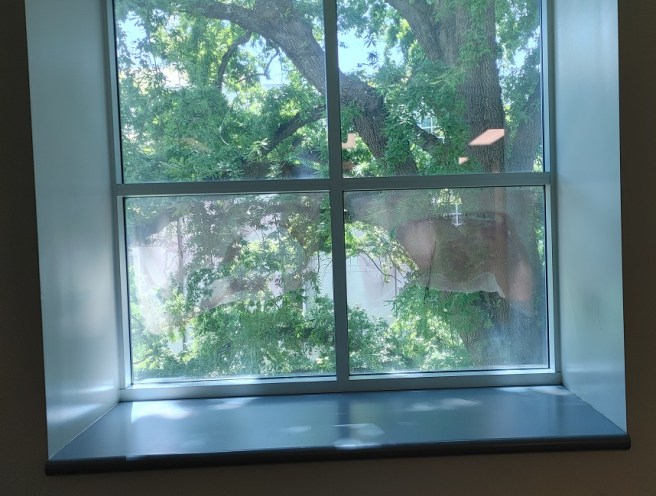
Disclaimer: Masaki Liu is a real person. Don’t Let The Days Go By is based on true stories, but normally I changes the names of all people involved. I have often used real names of actors, athletes, musicians, and other public figures in order to make DLTDGB historically accurate. The situation becomes more complicated in this episode, though, because the conversation with Masaki marks the first time that character-Greg actually interacts with a public figure. I actually did attend this convention, and I actually did meet Masaki at this table, but nevertheless this story should first and foremost be taken as a work of fiction, not necessarily an actual transcript of anything that Masaki actually said or did. I did not ask permission to use his name and likeness in this story.

The other episode that mentioned Dime Store Prophets (#132) contains the line “In my late twenties, two counties away, I attended a church where one of the former band members was the worship leader.” I attended Masaki’s church for about a year and a half. I have possible plans someday to write a sequel blog to DLTDGB that will open in 2004, during the time that Masaki and I were friends, and I have not yet decided how to handle the issue of whether or not to use his real name. If I do not, I may have to do some retconning to this episode. I have not stayed in touch with him, but I know people who would know how to get in touch with him in case I need to ask whether he is okay with me using his real name. I don’t believe Masaki will appear in DLTDGB again, so I have a few years to figure that out.

November 14, 1997.  Kind of brilliant, but really weird. (#153)

“I’ll see you tonight at JCF?” Sarah Winters asked as we left our math class in Younger Hall and crossed the street toward the Quad.

“Yeah,” I replied.  “Have a great day!”  I watched Sarah walk toward the Memorial Union as I walked diagonally in the other direction, crossing the Quad from northeast to southwest.  It was a sunny but cool November Friday morning, and many of the trees on campus were in the process of shedding their leaves.  Beyond the Quad, walking past the library and across Davis Drive, I noticed piles of leaves accumulating along the edges of walkways.  I continued south beyond Evans Hall, where I would go later tonight for Jeromeville Christian Fellowship; apparently Sarah would be there too.  I walked past the law school building to the University of Jeromeville Arboretum, a park-like public garden of trees and plants from around the world planted along a mile and a half of dry creek bed that had been converted into a long, skinny lake.  I walked past some succulents, their fleshy spiked leaves radiating from the ground, to a bridge a few feet wide connecting the north and south banks.  I stayed on the north side of the waterway and continued walking west on the path to the next bench, about fifty feet past the bridge, and sat, overlooking the waterway and a tall oak tree of the type that grew naturally here in the western United States.

Last year, I attended a convention in Urbana, Illinois, hosted by the parent organization of Jeromeville Christian Fellowship.  The convention was for university students and young adults to learn about missions and opportunities to serve Jesus around the world.  I was a newly practicing Christian at the time, many of my friends were doing these kinds of projects during the summer, and I wanted to learn more about what was out there.  Every attendee received a Bible that included in the back a plan to read through the Bible in a year, with a few chapters to read each day from three different parts in the Bible.  Next to each day’s readings were a checkmark.  Yesterday I had checked off August 8; I knew that I was a few months behind, and I had stopped trying to finish in a year.  I would just get through the entire Bible in as long as it took.

I read the verses for August 9 and prayed about what I read as I looked up at the oak tree.  Coming to this bench to read the Bible between classes had become my routine on school days for several months.  I had often heard talks and sermons about the importance of spending time with God first thing in the morning, but this routine seemed to work better for me.

On Fridays, I only had my two math classes.  I worked part time as a tutor that quarter, and I had one group that met on Fridays, in the afternoon after my other class.  After I finished reading, I headed back toward the Quad and the Memorial Union.  I planned to look for a table in the MU where I could sit and do homework until my other class started.  I had math to do, and it was the kind of assignment that did not require my full concentration, so I could work on it and not get distracted inside a busy student union.  Maybe I would even find friends to sit with, I thought.

As I looked around the tables, I did in fact find friends to sit with.  I saw Todd Chevallier, Autumn Davies, Leah Eckert, and John Harvey from JCF talking to Cheryl Munn, one of the paid staff for JCF.  They had pushed two tables together, and there appeared to be room for me to join them.  As I approached, Autumn smiled and waved.  Cheryl, who was sitting with her back to me, turned to her left, waving her arm toward me, holding her palm out at arm’s length, and said, “Out.”

What did I do?  I thought.  Did I accidentally say something inappropriate that had made me a pariah within JCF?  Was this another one of the cliques that had formed within JCF, doing some kind of exclusive Bible study that was only open by invitation?  Maybe no one was mad at me or trying to exclude me; maybe someone was just sharing something sensitive and did not want to share with people beyond a close circle of friends.  “Sorry,” I said, starting to back away.  Maybe I would not be sitting with friends this morning after all.

“Greg,” Cheryl said, motioning toward the table.  “Come sit!”

“You just told me not to,” I said, confused.

“Huh?  I was just telling Leah that she was on that side of the table, with her back to the wall, and she could see out.”  Cheryl made the same sweep of her arm, gesturing in my direction toward the rest of the room where others sat and a continuous stream of people walked by.

I stood for a second, puzzled, then laughed.  “Oh!” I exclaimed.  “I didn’t hear any of that.  I just saw you put your arm up, and all I heard you say was, ‘Out!’  I thought you were telling me to get out.”

“No, no!” Cheryl said.  Autumn laughed.  “Please, sit down!”  Relieved that I had done nothing wrong, I sat in an empty seat on the end of the table.  Cheryl and Todd sat on my left,  Autumn and Leah sat on my right, and John was facing me on the other end. “How’s your morning going?” Cheryl asked.

“Good.  Only two classes today.  Then I have a tutoring group this afternoon.”

“How’s tutoring going?  You like it?”

“Yeah.  It’s good experience, now that I know I want to be a teacher.  I’m going to do another internship in a classroom at Jeromeville High winter quarter.  I did that last spring, and I really liked it.”

“Did you guys hear Jeromeville is getting an In-N-Out Burger?” Todd asked excitedly.

“No!” Autumn exclaimed.

“Is that place good?” Leah asked.  “I’ve never heard of it.”

“I used to live in California,” Todd explained.  “It’s huge there.  It’s so good.”

“There’s one now in Gabilan, near where I grew up,” I said.  “My parents went there and said it wasn’t all that good.”

“That’s weird,” Todd replied.  “Everyone loves In-N-Out.”

“I’ll have to try it sometime.  I love burgers.”

“Hey, are you going to JCF tonight?”

“Yeah,” I replied.

Romeo + Juliet is playing at 199 Stone tonight.  We’re probably gonna get some people together to go.  You wanna come?”

“Sure.  Is that the new Romeo and Juliet movie that came out not too long ago?”

“Yeah.  With Leonardo DiCaprio and Claire Danes.”

“Okay,” I said.  Those actors’ names did not mean anything to me, I did not follow movies closely, but I was always looking for opportunities to hang out with friends, especially those that did not require a lot of work on my part to plan.

“Isn’t Leonardo DiCaprio in that Titanic movie that’s coming out soon?” Autumn asked.

“Yeah,” Todd replied.  “That one’s gonna be good too.  I heard they built a replica of the actual Titanic for the movie, just to sink it.”

“Wow,” I said.


I was running a little late when I got to Jeromeville Christian Fellowship that night, since I made spaghetti for dinner and spilled it all over myself, necessitating a change of clothes.  The worship team was already playing when I arrived, and the room was mostly full.  Maybe the spilling of the spaghetti had been divine intervention, I thought, because as I walked into the room, I found myself looking directly at the back of Carrie Valentine’s head.  She sat a few rows down, one seat in from the aisle, with an empty seat next to her.  I walked over to her, pointed to the empty seat, and nervously asked, “Is anyone sitting there?”  Hopefully she understood what I was saying over the music.

“Go ahead!” Carrie replied, smiling.  I sat next to her.  As we sang along, then listened to announcements and a talk delivered by Cheryl, I realized the great irony of this situation.  I was sitting next to a cute girl.  This would provide an opportunity for a conversation afterward.  But I could not make plans with her, because I already had plans tonight, to go to the movie with Todd and Autumn and all of them.  Go figure.  Nevertheless, after the ending song, I asked Carrie how her week was going.

“Good,” she said.  “I just had a midterm today.  I don’t think I did very well.”

“Maybe you’ll surprise yourself,” I said.  “I’ve been trying to get ahead on reading and studying, because I’m gonna miss class Thursday and Friday next week.”

“Why’s that?”

“Some of us from Jeromeville Covenant are taking a road trip to San Diego, for the National Youth Workers’ Convention.”

“That sounds like fun!”

“It will be.  Apparently a lot of big-name speakers will be there.  And a lot of Christian bands play live there.”

“Like who?”

DC Talk.  Audio Adrenaline.  Five Iron Frenzy.  The OC Supertones.  I don’t remember who else.”

“Wow!” Carrie said.  “San Diego is nice!  Have you been there before?”

“I haven’t.  I’ve only been as far south as Disneyland.  So this will be a new experience for me.”

“Have fun!  I’m jealous.”

“Thanks.  I’m excited!”

“How is that going, working with the youth group at church?  You work with junior high kids?”

“Yeah.  It’s a lot of fun.  Over the last few weeks, I did an unofficial project, not an actual church activity, where I made a movie based on some characters I created several years ago.  I got a lot of kids from the church to be in the movie.  And I filmed some of it at church, like we used the youth room for a school dance scene.”

“That sounds like so much fun!  How did the movie turn out?”

“Pretty good.  A little unprofessional looking in some spots, but it was fun.  We had a watch party after youth group this week.  Not a whole lot of people stuck around, but it was fun to watch the movie on the big projector screen in the youth room.”

“Nice!  I’ve never done anything like that.  My sister and I used to make home movies sometimes when we were kids, but nothing as complex as what it sounds like yours was.”

“That sounds like fun too,” I said.  I smiled, looking into Carrie’s big brown eyes, desperately trying to think of something to say to keep this conversation going.  I wondered if Todd would be okay with me inviting her along to see Romeo + Juliet?  “What are you doing tonight?” I asked.

“I’m not sure,” Carrie replied.  “I heard some people were going to see Romeo + Juliet, but I don’t know if I want to go.”

Perfect, I thought.  Carrie knew about the movie without me having to be awkward.  “I’m going,” I said.  “I think you should too.”

“I’ll wait and see how I feel later.  I need to go talk to some people from my Bible study before they leave.  But maybe I’ll see you at the movie tonight?”

“Yeah.  I’ll talk to you soon.”


William Shakespeare’s Romeo + Juliet, spelled with a plus sign but pronounced “Romeo and Juliet” like the play it was based on, was the movie that made actor Leonardo DiCaprio a household name.  I did not know much about the movie, except that I vaguely remembered hearing about its existence last year.  The lecture hall at 199 Stone Hall showed second-run movies on weekends, and this was often a destination for people hanging out after Jeromeville Christian Fellowship on Friday nights.

Carrie did end up coming to the movie.  A group of eight of us walked down Davis Drive from Evans Hall to Stone Hall, the next building to the west.  When we left, I was in the middle of telling Autumn about the Dog Crap and Vince movie that I made with the kids from church.  Autumn and I were near the back of the group, and Carrie was closer to the front.  As we walked into the theater, I could not position myself next to Carrie without looking conspicuous and awkward.  When I sat down, Todd was to my left, then Autumn, then three more people between Autumn and Carrie.  The aisle was on my right.  Carrie was here, but I was not sitting next to her.

When I was a freshman, movies at 199 Stone would be preceded by classic cartoons, an experience normally associated with past generations of moviegoers.  This tradition had fallen away at some point since then; tonight the screen showed a silent slideshow of advertisements before the movie started.  The lights darkened, I saw the name of the movie studio appear on the screen, but I became confused when a television with a news broadcast showed up on the screen.  Was the movie starting?  Was this the movie?  Surely this television was not part of the movie, since Shakespeare’s play was set in the sixteenth century.

The reporter began talking about the Montagues and Capulets.  Those were Romeo and Juliet’s respective families, so this was definitely the movie, but why did Verona look like a city in a gangsta-rap music video?  What were these police cars and helicopters?  I quickly realized that what I was seeing was not going to be a faithful reproduction of Shakespeare’s work.  Instead, the story had been adapted to a modern urban setting, with the Montagues and Capulets rival crime families.  As the movie continued, I noticed that all of the characters still spoke their actual lines, unchanged, from the Shakespeare play.

It was kind of brilliant, but it was really weird.

As the movie continued, I noticed more and more creative interpretations of Shakespeare’s words for a modern-day context.  The police chief was named Prince, for example, and it took me a while to realize that he filled the role of the actual Prince of Verona as written by Shakespeare.  The characters fought with models of guns named after the blade weapons used by Shakespeare’s original characters.  Even with these changes, though, it still seemed odd to me that these gangbangers spoke in Shakespearean vocabulary and iambic pentameter.

When the movie ended, as the credits played, I stood and stretched.  “That was weird,” I said disdainfully.

“That was so good!” Todd exclaimed.

“It was weird!” I repeated, louder.

“You didn’t like it?”

“It just seemed really unnatural having modern characters use Shakespeare’s language.”

“That’s what makes it so good!”

“I don’t know.  I guess it just wasn’t for me.  Thanks for inviting me, though.”

“Any time.”

As we walked out toward the parking lot, many of the others talked about how much they loved the movie, and I remained silent.  I tuned out the conversation, so I did not find out what Carrie thought of the movie.  I did not want to say any more bad things about the movie, in case Carrie loved it as much as Todd did.  I may have already ruined any chance I had with Carrie by not liking the movie, and I did not want to open my mouth again and make things worse.

I never watched that movie again, although now, with a quarter-century of hindsight, I would not rule out giving it another chance if the opportunity arose.  Maybe I would enjoy it more knowing from the start that the movie was a combination of Shakespeare’s words and a modern-day setting, and not having my thoughts darkened by the frustration of not getting to sit next to Carrie.

Why was it so difficult to ask a girl out?  Why was this process so difficult for me to understand?  Romeo and Juliet had no such problems.  Romeo crashes a party because he wants to bang some other chick who he knows will be there, he and Juliet see each other, he goes to the balcony, and boom, they were in love that night and married the next day.  What was wrong with me that love never dropped into my lap like that?  Of course, as a direct result of all of this, Romeo and Juliet both end up dead after a few days.  Maybe it was for the best that my life did not turn out like Romeo’s life; this story was, after all, a tragedy.


Readers: Was there ever a movie that all your friends liked but you didn’t? Tell me about it in the comments.

If you like what you read, don’t forget to like this post and follow this blog. Also follow Don’t Let The Days Go By on Facebook and Instagram.


November 5, 1997.  Another epic prank. (#152)

“Excuse me?” the employee at the grocery store told me.  “You’re not allowed to have that in here.”

“What?” I asked.

“The camera.  Those aren’t allowed in here.”

“Why?”

“Company policy.”

“But why?”

“I don’t know.  But it’s our company policy.”

“That’s dumb,” I said.

I sulked toward the front of the store, holding two 12-packs of toilet paper in one hand and the Santoros’ video camera in the other.  Taylor, Noah, and Erica were standing near the front of the store, each also holding toilet paper.  “They said we weren’t allowed to use the camera in here,” I said, disappointed.

“What?” Erica replied.

“Maybe because they don’t want competitors to find out how they do business, or what their prices are,” Noah explained.

“I guess that makes sense,” I said.  “But then we’ll be missing the start of the video where it shows all of us buying toilet paper.

“What if we film from the parking lot?  We can show each of us walking out of the store with toilet paper,” Taylor suggested.

“That’s a great idea,” I said.  “Where are Brody and Courtney?”

“Here they come,” Taylor pointed across the store, where Brody and Courtney approached us, each carrying toilet paper and giggling about something, as they often did.  The six of us all got in line to pay for our purchases.

“Wow,” the cashier commented, seeing all of us buying toilet paper together.  “Someone’s getting hit tonight.”  I laughed.

I went through the line first and waited outside, with the camera running.  We had each paid separately because we wanted to record a video of each of us individually buying toilet paper.  I stood in the parking lot and recorded Taylor, Noah, Courtney, Brody, and Erica each walking out of the store holding toilet paper, with about three seconds between each person.  I then walked inside the store and walked back out carrying my toilet paper, with Brody holding the camera, so that I could be in the video as well.


Lucky closed at midnight on weekdays, and we had finished our purchase and left the store about half an hour before closing.  It was a Wednesday night, and a few hours ago, we had all been at The Edge, the youth group for junior high school students at Jeromeville Covenant Church.  I was borrowing a VHS video camera from Zac Santoro and his family, because we were making a movie based on my characters Dog Crap and Vince.  That was the week that we had recorded the school dance scene after youth group.  The students did not know that we had plans to make another video with the same camera after they went home and went to bed.

A week ago, during our weekly meeting before the students arrive, we were talking about playing some kind of fun, non-destructive prank on a large group of students, and making a video of it to show at youth group.  “Does anyone have a video camera?” Noah asked.

“I’m borrowing one from the Santoros right now, because we’re working on the Dog Crap and Vince movie,” I explained.

“That’s perfect!”  We discussed all of the usual playful pranks that were popular at the time and made a plan.  Not everyone participated; Cambria and Hannah both had midterms to study for and could not stay up all night, as this would probably require.  Adam, the youth pastor, politely declined, although he was completely supportive of what we were planning to do.

Back then, Brody drove an old family sedan that seated six, three in front and three in back. The car had been his family’s old car.  We all piled in the car and headed north on Andrews Road, across Coventry Boulevard, toward the Santoros’ house.  We went there first because it was the closest.  “Kind of ironic that we’re using the Santoros’ camera to record the Santoros getting toilet-papered,” I remarked.

“I know!” Taylor said.

Brody stopped the car around the corner from the Santoros’ house, far enough away that they would not notice.  “Wait,” Taylor said before we got out.  “Let’s make sure to ration our toilet paper.  How many houses are we hitting?”

Noah looked at the list that we had made earlier.  “Eighteen,” he said.

“And we each got two 12-packs, so that’s 24 rolls.  Six of us, what’s six times 24?”

“One hundred forty-four,” I blurted out.

“And eighteen houses, what’s 144 divided by 18?”

“Eight,” I replied just as quickly.

“Good thing we have a math major on this adventure!” Courtney said.

“Yeah, because apparently you need my advanced math skills to do second grade arithmetic.  Just kidding.”

“So,” Taylor said, “maximum of eight rolls per house.  Ready?  Go!”

We began unwrapping the cases of toilet paper.  We carefully counted out eight rolls and walked quickly but quietly to the Santoros’ front yard, some of us carrying one roll and some of us carrying two.  Brody looked ready to throw his in the tree, but Taylor grabbed his arm.  “Wait!” he whispered.

“What?” Brody mouthed silently.

“We should show the house on camera first with no toilet paper.  So Zac can recognize his house.  Then we’ll show scenes of us TP’ing it.  And do that for all the houses.”

“Good idea,” I mouthed, nodding.  I started the camera and recorded the front of the house for a few seconds.  Then as the others threw their rolls of toilet paper into the trees and bushes, I continued recording people throwing toilet paper flying through the air, and the trees and bushes covered in long white streaks.  We stood back and admired our work for a few seconds, then quickly walked back to the car.  It was already midnight on a school night, and we had a lot of work to do.

Next, we drove the quarter-mile to Samantha Willis’ house, on the end of a cul-de-sac off of Alvarez Avenue.  We parked at the other end of the street, near the corner with Alvarez, and carried a total of eight rolls of toilet paper to the Willises’ front yard.  I had not been to this house before, but it backed up to the Coventry Greenbelt, so I had probably been on a bike ride at some point and seen the Willises’ back fence from a distance without realizing it.  The other five carefully tiptoed around the yard, throwing toilet paper up into the tree and across the bushes, as I stood back recording it all on camera.  I made sure to get a clear shot of the house, so that Samantha and her friends would recognize the house.  “This video is gonna be so cool,” I whispered to Taylor and Noah as we quietly walked back to the car.


We had been planning this event for the last week, and I had been assigned the task of making our route, since everyone knew that I was good with maps and directions.  Noah and Taylor, in consultation with Adam, had made a list of which students’ houses to visit.  We only included students from families that were regularly involved at church and families whom the youth leaders knew well.  Some of the kids came from families that would not appreciate being pranked, and some families were unsupportive of their children’s involvement with Christianity, so we did not want to get in trouble or jeopardize our relationships with those students and their families.

We hit a few more houses in north Jeromeville, then headed west across the overpass at Highway 117 to three houses in west Jeromeville.  We arrived at the Fosters’ house first of those three.  As we approached the front yard, full of bushes that could hold a lot of toilet paper, Erica turned to me and said, “This is really weird, toilet-papering my own house.”

“I know!” I said.  I kept one roll for myself, because of something I thought of on the drive over here.  When the other seven rolls had been strewn about the bushes, I unrolled mine and began decorating a large bush that had mostly been missed by the others.

As we tiptoed back to the car, I could now turn to Erica and whisper, “Your house is now the only house in the world which I have toilet-papered twice, once on the outside and once on the inside.”  I knew that Erica knew of my involvement in the prank that we pulled for her birthday last year, so I was not incriminating myself by saying that.

Erica thought about this for a second, then smiled and laughed.  “Oh, yeah!” she whispered back.  “And I never changed my answering machine from that night!  People still hear you guys singing when they call me!”

“That’s amazing!”

“I still think it’s hilarious that you filled up all those water bottles.”

“I think that was Brody’s idea.”

“Sounds like a Brody thing.”

Several houses later, we were driving along 8th Street in central Jeromeville when we noticed another car behind us turning out from a side street.  A few seconds later, flashing red and blue lights appeared from the car behind us.  Brody swore and signaled to pull over.  I looked at Taylor and Noah, horrified.  “Hide the toilet paper!” Taylor said, as we attempted to push as much of it as we could under our feet.

As Brody rolled down the window, the police officer from the car that pulled us over approached and said, “Your tail light is cracked.”

“It is?” Brody said.  “I didn’t know that.”

“Can I see your license and registration?” the officer asked.  Brody produced the necessary paperwork, and the officer filled out a ticket for Brody to repair the taillight.

“I’ll get that taken care of,” Brody said, looking at the ticket and putting it aside.

“Have any of you been drinking?”

“What?  No, we haven’t.”

“Step out of the car, please.”

Brody stepped out of the car as I sat silently in the back, terrified, looking at the others who were being equally silent.  After a couple minutes, the officer was sufficiently satisfied that Brody was sober and let him return to the car.  The police car drove off.

“Turn on the camera!” Taylor said.  I did so and pointed it at Taylor, who spoke to the camera.  “This is Taylor, reporting live from The Edge.  We just got stopped by the cops!  Brody, tell them what happened.”

I turned the camera to Brody, who said, “He said my tail light was cracked.”

“What else?”

“He wanted to know if I had been drinking.” Brody chuckled.  “Of course not.”

“We now return you to your regularly scheduled program,” Taylor said.  I turned the camera off.

A little bit later, we parked down the street from the Foremans’ house.  The Foremans had two students in The Edge, eighth-grade Shawna and seventh-grade Cory.  They lived on a cul-de-sac, this one in an older neighborhood, off of M Street just east of downtown Jeromeville.  “Be careful,” Noah whispered to the rest of us just before we got out of the car.  “They have dogs that might start barking.”  I nodded quietly.

Courtney was in the front as the six of us walked toward the Foremans’ house.  Their next-door neighbors had a tall sycamore tree that was beginning to shed leaves, and Courtney stepped on a dry, crunchy leaf as we reached the Foremans’ driveway.  As soon as the leaf crunched, two dogs began barking loudly.

“Run!” Noah whispered.  The six of us made an abrupt about-face and ran down to the car parked four houses away.  After we caught our breath, Taylor told me to start recording.  Brody turned north on M Street as Taylor announced, “This is Taylor, coming to you live from The Edge!  Shawna, Corey, we tried to include your house on this, but your dogs started barking.  If you woke up to the dogs barking in the middle of the night Wednesday night, or Thursday morning, that was us.  Sorry if we woke you up.  Hope you got back to sleep.”

We continued heading east after the Foremans’ house.  Eventually we reached Beech Drive, where the Houstons and the Suttons lived across the street from each other.  We only had to park once in order to hit both houses.

“They’re going to know right away it was us,” Noah said.  “Whoever goes outside first in the morning will notice that both of them got hit.”

“Should we only do one of their houses?”

“No, it’s okay.  Everyone will figure it out soon enough.”

I did my usual thing, recording each house from the outside first, then getting footage of the others throwing toilet paper into trees and unrolling toilet paper along bushes.  After we finished on Beech Lane, we drove all the way to Bruce Boulevard on the eastern edge of Jeromeville and crossed south of Highway 100 to hit a few houses in south Jeromeville.  By the time we finally got back to the church, where everyone had parked, it was almost three in the morning.  I walked home, since I lived just a short distance from church, and very quietly tiptoed to my bed and slept for less than four hours, since I had a full day of class and working as a tutor tomorrow.


“Greg,” I heard a woman’s voice say as I was leaving church the following Sunday.  I turned around and saw Mrs. Houston smiling at me.  “How was your week?” she asked.

“It was good,” I said.

“I was thinking about you the other day.  I was going to call you in the middle of the night and remind you that we love you.”  I looked at Mrs. Houston, a little confused, and she continued, “You know.  Because you stopped by in the middle of the night and told us that you loved us.”

“I see,” I said, chuckling.

Noah and Adam edited my footage down to a video about seven minutes long, with the Mission: Impossible theme song playing in the background.  This song, originally from an old television show about secret agents, had become popular again in recent years.  A movie based on the old show was released last year, and Adam Clayton and Larry Mullen, the bassist and drummer for the band U2, had a top 10 hit with their recording of the theme song.  We showed the video at The Edge the following week, and students cheered and laughed as their houses appeared on the screen.

I have often humorously wondered if God keeps some kind of record for each person of how much toilet paper everyone has used for pranking purposes and how much each person has received as the target of pranks.  If such a ledger exists, mine is far out of balance.  I have thrown many rolls of toilet paper for amusement purposes, mostly during my early twenties but also a couple of times after that, yet I have only ever received one roll in return.  During that same school year, different leaders with The Edge would take turns hosting watch parties for Monday Night Football each week.  This had been a popular tradition with previous years’ groups of students, but the students we had this year were not into football so much.  They would get bored by halftime and just to hang out or play games instead.  The Monday after we showed the video, I was hosting the football watch party, and Noah and Brody, who shared an apartment right across the street from me, were at my house.  Adam pulled me and a couple of the boys aside at one point and said that we should prank Noah and Brody while they watched the game, so in an inconspicuous span of five minutes, we walked across the street with a couple of rolls of toilet paper and decorated the bushes in front of Noah and Brody’s apartment.  The following week, I was at Noah and Brody’s for Monday Night Football, and when I got home, I noticed that someone had tossed one roll of toilet paper into the tree in my front yard.

Of course, there is no eternal consequence for being out of balance like this, and it is not something that affects my life from day to day.  All of this toilet-papering was in good fun, and as Mrs. Houston said, playful and non-destructive pranks like this are a way for recipients of the prank to know that we are loved.


Readers: Those of you who know where I live in real life, please don’t toilet-paper my house. I have enough to deal with right now. Also, tell me about some pranks that you’ve been part of.

If you like what you read, don’t forget to like this post and follow this blog. Also follow Don’t Let The Days Go By on Facebook and Instagram.


October 31-November 2, 1997.  Wrestling with God at Fall Conference. (#151)

The year that I was a senior, Jeromeville Christian Fellowship had a large class of freshmen who had been very active in the group.  Also, many of the students in the class above me did not graduate in four years and were still involved in JCF as fifth-year students.  The group was the largest that it had been in the time I had been involved; its Friday night large group meetings were almost completely filling 170 Evans, a lecture hall with two hundred seats.

October 31 was a Friday that year, but there was no large group meeting, because it was the weekend of the annual Fall Conference.  Not everyone who came on a typical Friday had the money and free time for a weekend retreat, but around seventy people from JCF attended Fall Conference that year.  JCF was a chapter of Intervarsity, a nondenominational Christian ministry with chapters at colleges and universities across the United States and a few other countries.  This Fall Conference was a regional retreat, attended by students from Intervarsity chapters at six different schools around the area.  The University of Jeromeville had the largest chapter out of all of them.  Last year, about half of the students at Fall Conference came from UJ.

Those of us who were going met at four o’clock in a parking lot on campus to carpool for the hundred-mile trip north to the retreat center at Muddy Springs.  Tim Walton, a freshman with thick black glasses, approached me as I walked from my car to where the rest of the people were.  He was with another freshman, a tall, sandy-haired guy whom I had met a couple of times whom I knew only as “3.”  “Hey, Greg,” Tim said.  “We’re in your car.”

“Cool,” I replied.  “Who has the list?”

“Dave and Janet.”

I walked over toward Dave and Janet McAllen, the couple who worked full time as staff for JCF.  Janet held a clipboard and made a checkmark next to my name.  I looked to see whose names were next to mine.  Melinda Schmidt, Autumn Davies, Tim Walton, 3.  Even the carpool list just called him 3.  “Autumn isn’t here yet,” Janet said.  “Do you need the directions?”

“I remember how to get there,” I said.

I saw Melinda in the distance; I walked off to tell her that I had arrived.  She carried her bag to my car, where Tim and 3 stood waiting for me to unlock it so they could put their things in the back.  Autumn arrived about five minutes later; after she loaded her bags, the five of us got in the car and headed north on Highway 117.

The North Valley was a productive agricultural region, with a variety of crops grown.  Highway 117 narrowed to one lane in each direction north of Woodville, passing through various fields, pastures, and orchards.  This was a lonely stretch of road, with only one town of around a thousand people in the thirty-mile stretch between Woodville and the point where Highway 117 ended and merged with Highway 9.

“Can I put this in?” Melinda asked, holding up a tape.  “It’s a mixtape of Christian music.”

“Sure,” I replied.  Melinda put her tape into my car stereo; the first song was “Liquid” by Jars of Clay.  I knew that one.

“Did you guys do anything for Halloween?” Autumn asked.

“I was at the Halloween party at the De Anza house,” I said.  “They had it last night, since most of them are on this retreat.  Tim and 3 were there too.”

“How was that?  I wanted to go!”

“It was fun.”

“I wanted to go too,” Melinda added.  “I had a midterm today that I needed to study for.”

“What did you dress as?” Autumn asked.

“I just wore this old 70s-looking jacket that I borrowed it from the lost and found at church.  Xander had a great costume.  He dressed as a hillbilly, with overalls, and a cowboy hat, and a piece of straw in his mouth.  And he had a real missing tooth.”

“What?  Missing tooth?”

“Yeah.  Apparently he really is missing a tooth.  He normally wears a bridge, and he took it out for his costume.”

“Wow,” Autumn said.  “That’s dedication.”

“Lots of good costumes.  Sam Hoffman was Austin Powers.  And Ramon was Michael Jackson.  He even went to campus in costume today.  Did you see him in the parking lot?”

“No!”

“He’s still in costume, with the red jacket and the glove, and he made his hair more curly than usual.”

“That’s amazing!”

“He pulled it off really well,” Tim said.

At its north end, Highway 117 merged into Highway 9 just south of Mecklenburg, a medium-sized city about the size of Jeromeville.  From there, we drove north through various fruit and nut orchards and a few small towns.  Melinda’s tape ran out, and Tim put on a tape with some really weird songs on it.  He said it was from some TV show on a channel I didn’t get.

“You’ve never seen that show?” Tim asked, incredulously.

“I don’t have cable,” I explained.  “None of us really watch TV all that much.  And the cable provider where I grew up doesn’t have a whole lot of channels compared to most places.”

“Wow.”

Around quarter to six, we arrived in Bidwell, a city of about ninety thousand and home to one of this state’s oldest public universities.  My dad had spent his early childhood in Bidwell, and I still had relatives in the area that I had grown up visiting around twice per year.  I had applied to Bidwell State, and was accepted, but Jeromeville is a more prestigious university, and they offered me a scholarship for my grades.  I turned off of Highway 9 at the exit leading to Muddy Springs.  There was a Wendy’s just off of that exit where most of the carpools coming from Jeromeville stopped to eat.  The five of us sat at a table together, watching people from JCF who arrived before us leave and watching others arrive after us.

“I’ve never asked,” Autumn asked 3 at one point.  “Why do they call you ‘3?’”  I was glad Autumn asked, because I had been wondering the same thing since I met 3 a few weeks ago, and I thought asking would be too awkward.

“My real name is Robert A. Silver III,” 3 explained.  “Because I’m The Third, my family just started calling me ‘3’ when I was a kid.  Some people who are The Third go by ‘Trey,’ but my dad just thought ‘3’ sounded better.”

“That’s a great nickname.”

“So is anyone hoping to learn anything specific at this conference?” Melinda asked.  “God spoke to me so much on the China trip over the summer.  I can’t want to do something like that again next summer.”

“What was this China trip?” 3 asked.  Melinda explained that twelve students from JCF went on a mission trip to China over the summer as part of a large group of hundreds of students from various Intervarsity chapters around the US. 3 was a freshman, so he would not have been around last year when they were preparing for the trip.

“I don’t know,” I said.  “Just whatever God wants to teach me, I guess.”


After we arrived at Fall Conference, nine miles past Wendy’s into the foothills outside of Bidwell, all six schools had a worship session led by JCF’s worship team.  A group of students, also from Jeromeville, performed a skit about a freshman experiencing Jesus for the first time. In between scenes from a day in the student’s life, Ramon danced in his Michael Jackson costume and sang a song called “Freshman,” to the tune of “Thriller.”  Liz Williams, actually a senior, played the freshman, and from the way she and Ramon behaved after the skit finished, it quickly became apparent to me that they were back together.  Liz and Ramon had been a couple from about a month into freshman year until the start of junior year, when they had an amicable breakup.  To this day, I do not know exactly how or when they got back together, or why.  I’m always out of the loop of other people’s relationships, even though I had known Liz and Ramon as long as they had known each other, and three years later I would eventually attend their wedding.

The head staff from Capital State’s Intervarsity chapter, a man in his thirties named Stan, led the teaching that weekend.  He spoke on Genesis chapter 32, in which God wrestles with Jacob and gives him the name Israel, meaning “he struggles with God.”  Jacob later would go on to be the ancestor of God’s chosen people, the twelve tribes of Israel.  I was tired, so I went to bed fairly soon after Stan’s talk Friday night.  Stan continued his teaching Saturday morning, and after that session, we all received a handout, with instructions to find a quiet place and spend some time with God.  The handout listed verses to read and related questions to answer.

It was a cool morning; I put on a sweatshirt and walked around outside.  A large ninety-year-old building dominated the retreat center; it had been built as a hotel, the centerpiece of a mountain getaway resort.  It was later sold to a Christian organization, who now used the first floor as the lobby, cafeteria, and a meeting room, and the rest as a dormitory.  The paved road ended at the parking lot for the retreat center; I noticed a dirt road continuing deeper into the hills which I had never noticed before.  I walked in that direction, carrying my Bible.

The last four miles of the drive to Muddy Springs followed a canyon into the hills, and this dirt road continued to follow the small stream that formed the canyon.  Oaks grew in the valley, at least in the areas that had not been claimed for agriculture, and pines grew in the mountains; Muddy Springs was in the transition area where both grew on the surrounding grassy hills.  The hills were brown; it had not rained in at least six months.  In this part of the world, October typically felt like a milder version of summer, with sunny and pleasant days, but today was the first of November, and right around the time the calendar changed, the weather usually did too.  The rain had not returned yet, but the sky was gray and dreary, and the leaves on the oaks were becoming more brown and more sparse.  I found a large rock with a flat enough top to sit on, overlooking the canyon and the ridge beyond.

I read from the handout.  Pray that God will open your eyes and ears to His presence in your life, I read.  I did this.  I followed the succeeding prompts on the page, thinking about how I might be wrestling with God at the moment.  I prayed about my struggles with being outside the cliques.  I prayed that I would meet a nice Christian girlfriend soon, and I prayed for patience until that happened.  I continued reading the paper; it said to listen quietly until I heard God speak.  I closed my eyes and bowed my head.  After hearing nothing, I opened my eyes and looked around.  I stared at the hills around me, at the gray sky, at the trees.  I bowed my head and closed my eyes again.  Still nothing.

The schedule for the day had allotted an hour for us to wrestle with God outside that morning, and by the end of that hour, I was frustrated.  God had not even shown up to wrestle with me.  Did that mean I won by forfeit?  That was not the point; it felt more discouraging than anything, like I was not important enough for God to speak to.  I looked at my watch; it was almost time for lunch.  I started walking back to the building, defeated, and I sat and ate alone.

“Hey, Greg,” Eddie Baker said, approaching me.  He had just finished eating with others, and he was walking toward the exit with Tabitha, his girlfriend.  “What’s up?”

“I’m just kind of discouraged.  I feel like God isn’t speaking to me, like he did to Jacob, or like all the stories I hear from all of you guys.  Like maybe I’m not a real Christian.  Or not a good enough one.”

“That’s not true!” Eddie replied.  “Look at how much you’ve grown the last two years.  You’ve helped out with things around here.  And now you’re working with junior high kids at church.  It takes a lot of faith to commit to something like that.”

“God speaks to everyone in his own way and his own timing,” Tabitha added.  “Don’t think of yourself as less than others because you don’t hear from him in the same way.”

“I guess,” I replied.

“I’ve been where you are, and so have a lot of us,” Eddie explained.  “This is the way that God wrestles with us sometimes.  Just keep listening for his voice.”

“And when you feel like you’re not good enough?” Tabitha said.  “That’s not God’s voice.  That’s Satan trying to distract you.”

“I know,” I said.

“Can I pray for you?” Eddie asked.

“Sure.”

“Father God,” Eddie began as we bowed our heads, “I pray for Greg, that you will speak to him, in a way that he will hear your voice clearly.  I pray that he will shake off all of this discouragement, and know that it is not from you.  I pray that you will give him a new name and a new identity, so that he will know his identity in you, as your beloved child.  I thank you for bringing him here to Muddy Springs, and I pray that when we go back to Jeromeville, Greg will return with a renewed sense of faith and identity in you.  Amen.”

“Amen,” I said, looking up.  “Thanks.”


We had the afternoon free, so I went back to my room.  Kieran Ziegler was my roommate for the weekend.  “I love that story about Jacob wrestling with God,” Kieran said.  “Because I can tell people that wrestling is the only sport mentioned in the Bible.”

“Oh yeah,” I said, chuckling.  Kieran was on the UJ wrestling team; of course he would notice this.

“Brent is gonna get some people to play Ultimate.  You wanna come?”

“I need a nap,” I said.  “Maybe if you’re still playing when I wake up.  Or when I give up on trying to fall asleep.”

“No problem.  I’ll see you around.”

I closed my eyes after Kieran left, but I did not sleep.  I could not shake these thoughts of not being good enough.  I still felt left out of the cliques within JCF.  I wished I had been asked to live at the house on De Anza Drive, with Eddie and Xander and Ramon and Jason and John and Lars.  All the cool things in my social circle happened around those guys, like the Halloween party Thursday night.  I kept hearing people tell stories about God working in their lives, like when Melinda and Eddie and Tabitha and a bunch of others went on the China trip last summer.  Some people have said that they sometimes hear God speak audibly, and some of my friends came from the kind of Christian traditions that spoke in tongues.  Many of my friends have led others to faith; Eddie did that with his freshman dorm roommate, Raphael.  But not me.  I was not good at talking about Jesus or my faith with others, and that would probably make me ineffective on a mission trip to another country.  I had heard a speaker once highlight the importance of supporting missionaries behind the scenes, and I was all for that.  I gave money to friends’ mission trips, and to my church, which supported missionaries.  That role was more suited to me.  But it also made me feel like I was missing out on all the cool experiences.

I went outside after about forty-five minutes of not sleeping.  The Ultimate Frisbee game was still going on, but with no flat grassy field at Muddy Springs, they played on a paved basketball court, which did not exactly seem safe.  I watched the game with a few other people who were just hanging out and watching.

At the evening session, Stan from Cap State told stories from the Bible about other people whose names and identities God changed, besides Jacob.  Rahab, the prostitute from Jericho who helped the Israelite spies, whose family God saved from Jericho’s coming destruction.  The invalid at the pool of Bethesda, whom Jesus healed.  And Abram, Jacob’s grandfather.  Long before God wrestled with Jacob, he changed Abram’s name to Abraham, to indicate that Abraham, an old man with a barren wife, would become the father of a great nation.  I read all of these stories again later that night before I went to bed, trying to keep these Bible stories on my mind to avoid another descent into discouraging thoughts.


When I woke up, the sky was sunny and clear.  It was still cold, but the dreary gray had departed.  My mind was also becoming sunny and clear as I kept thinking about last night, particularly about the man whom Jesus healed at the pool of Bethesda.  I read his story, chapter 5 of the Gospel of John, again that morning, and something stood out to me.  I knew in my head that God was not ignoring me when he remained silent, but it seemed much more real now.

The conference center gave out name tags in plastic cases to all attendees.  I removed my name tag from the plastic case and turned it backward, so that the blank back of the card showed, then I put it back in the case and attached it to my shirt with the built-in safety pin.

The students from all six schools gathered in the main hall, in a separate building from the old hotel, for worship that morning.  Before Stan gave his final message, Janet McAllen got up and invited anyone who so desired to share something that we learned this weekend.  “Tell us your name, what school you’re from, and anything that God spoke to you this weekend,” she said.  I raised my hand, and she called on me first.

“Hi,” I said, standing up.  This was it, the moment I got to share my sudden idea. I pointed to my blank name tag and said, “I don’t have a name, because God is going to give me a new one.”  I smiled, and everyone clapped for me.  I was not doing this for applause, though.  “Sometimes I feel like I’m not really hearing from God the same way everyone else does,” I continued.  “But that doesn’t mean that God has given up on me.  The man by the pool at Bethesda waited thirty-eight years to meet Jesus.  God could have healed him earlier, but he waited until the time was right for the man to meet Jesus face to face.  The man didn’t know that.  We don’t always understand God’s timing.  But I’m going to keep listening, and following, and God will answer all these questions I have in his own time.”

I sat down again.  A few other people stood up and shared what they learned.  After one final message from Stan, we all went to lunch, then we began packing for the return trip.  No one played music on the trip home, because everyone was tired.  Autumn slept most of the way home, and 3 nodded off for a bit too.  I was okay with that.

And I was also okay with not being in all the cliques, and I was okay with not having a girlfriend.  At least I was trying to be okay.  All of those names that had been stuck in my head for years, outcast, loser, forever alone, and all the horrible names my classmates in elementary school had called me, those were not God’s name for me.  God had already changed my name.  I was his beloved child, I was forgiven, I was saved, and I was living his will for my life.  Sure, I would suffer setbacks, and life would not always go the way I wanted it to, but that was because my vision was short sighted.  God had a better long-term plan for me, and ultimately, if I was living out God’s will in my life, nothing could stop me.


Readers: Have you ever felt like you were wrestling with God, or just struggling in general with something you believe in? Tell me about it in the comments, if it’s not too personal.

Check out my other projects, Greg Out Of Character and Song of the Day by DJ GJ-64.

If you like what you read, don’t forget to like this post and follow this blog. Also follow Don’t Let The Days Go By on Facebook and Instagram.